Bali + Komodo Liveaboard Combos for 2027: The 3-Nights-Bali, 3-Nights-at-Sea Blueprint
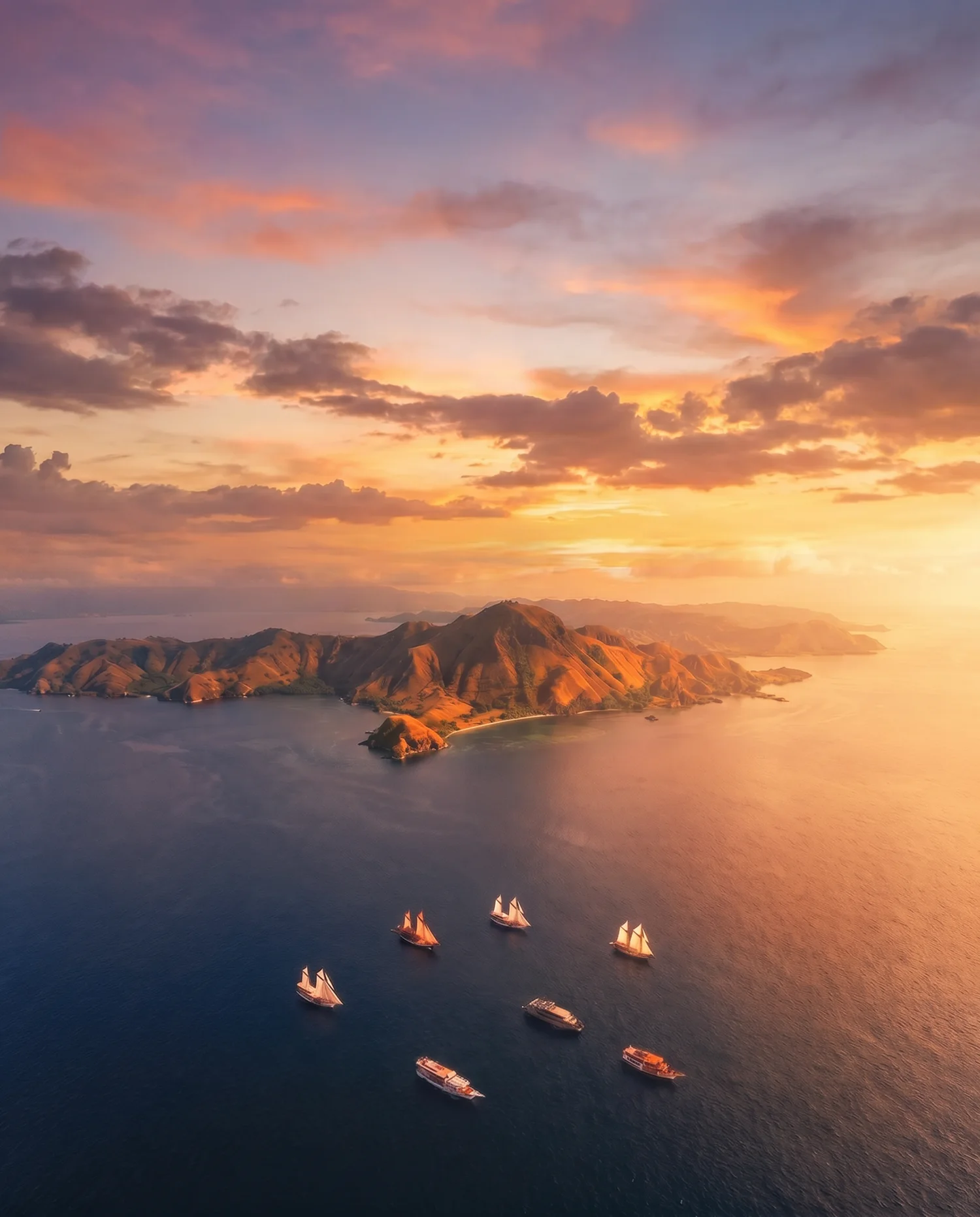
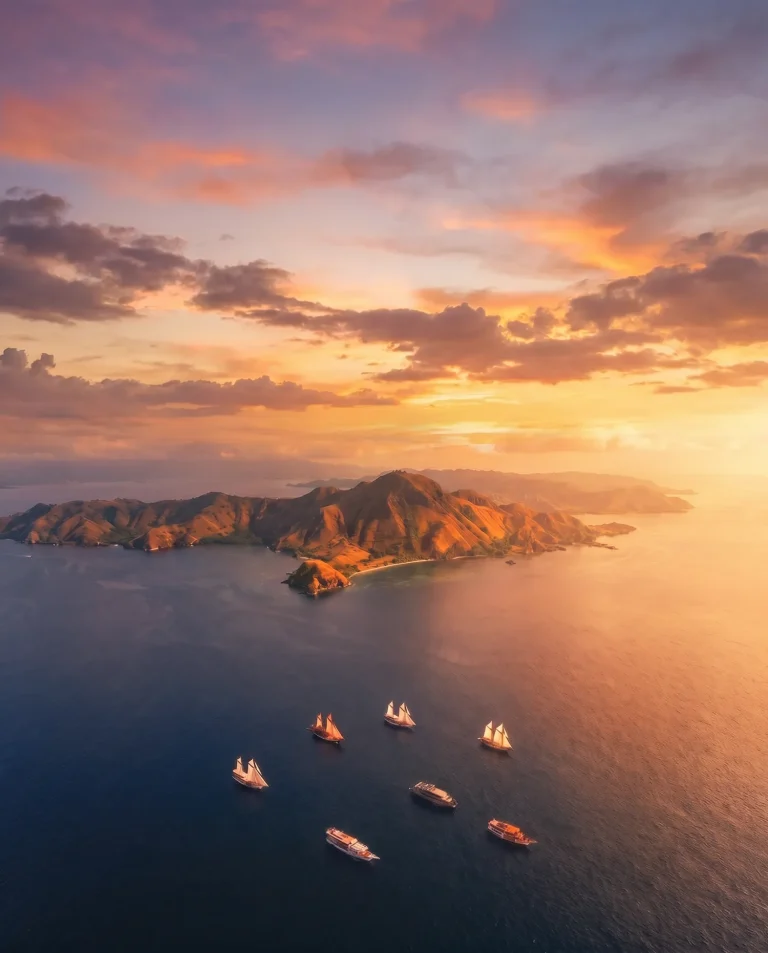
The most dependable Bali Komodo liveaboard combo for 2027 is a six-night split: three nights on land in Bali, a short morning flight to Labuan Bajo, then three nights aboard a boat sailing through Komodo National Park. Bali goes first because it absorbs jet lag, long-haul delays, and lost luggage; the sea leg goes second because a liveaboard rewards travelers who arrive rested. The flight between Denpasar and Labuan Bajo takes roughly an hour, which is what makes stitching the two halves together so painless — and why this pattern has quietly become the default way to see both islands in a single week.
Last updated: August 16, 2026
Why three-and-three beats every other split
We have tested lopsided versions of this trip — five nights in Bali with a rushed overnight boat, or five nights at sea bracketed by airport hotels — and the 3+3 rhythm keeps winning for one reason: each half is long enough to stop feeling like transit. Three nights in Bali gives you two full days, which is enough to settle into one area properly instead of commuting across the island. Three nights at sea covers every marquee stop in the national park without the itinerary compression that plagues two-day trips, where Padar sunrise, dragon trekking, and manta snorkeling get crammed into a single exhausting day.
There is also a quieter argument for the split. A liveaboard is a small, shared space with a fixed daily rhythm — early starts, salt water, engine hum. Coming to it from a Bali villa, you experience that rhythm as novelty. Coming to it straight off a long-haul flight, you experience it as endurance.
The blueprint, day by day
Days 1–3: Bali as the soft landing
Pick one base and stay put. Sanur and Uluwatu suit travelers who want quiet mornings; Ubud suits those who want rice terraces and a cooler climate; Canggu suits nobody who dislikes traffic. The tactical reason for a single base is the switch day: you want to be within a predictable ride of the domestic terminal on the morning of day four, not on the wrong side of the island. Use these days for the things Komodo cannot give you — spas, temple visits, long dinners — rather than boat trips you are about to outclass.
Day 4: the switch
Morning flights from Denpasar to Labuan Bajo land in time for a midday boat departure, and most liveaboards schedule embarkation around exactly this window. Build in slack anyway: take the earliest flight you can tolerate, carry your essentials in a cabin bag, and treat checked luggage as a convenience rather than a necessity. Domestic baggage allowances in Indonesia are lower than international ones, so weigh your bag before you assume anything.
Days 4–6: the sea leg
A standard three-night route works a loop through the park’s north and center: Padar’s ridgeline and the pink-sand beach on one day, a ranger-guided dragon walk on Komodo or Rinca on another, and a drift over Karang Makassar — the manta aggregation site — woven in around the sailing schedule. If you want to see how operators actually sequence these stops before you commit, the published route of a typical Komodo sailing trip is a useful reference for what a well-paced three-night loop looks like on paper.
What three nights at sea actually covers
Compressed into list form, a three-night itinerary typically includes:
- Padar Island — the tri-colored bay viewpoint, climbed at dawn before the heat arrives.
- Pink Beach — one of the park’s rose-tinted sands, colored by crushed red foraminifera.
- A dragon walk — ranger-led, on Komodo Island’s Loh Liang trails or Rinca’s Loh Buaya boardwalk.
- Karang Makassar — the drift snorkel where reef mantas feed in the current.
- Taka Makassar — a crescent sandbar that appears and disappears with the tide.
- Two quiet anchorages — the underrated part: nights with no light pollution and mornings where you swim before breakfast.
What it does not cover is the far south — Manta Alley, Loh Sera — which needs more days and calmer seas. Treat the southern sites as the argument for a return trip, not a reason to overload this one.
Picking your 2027 window
The dry season runs roughly April through November. May, June, and September are the balance points: reliable seas, green-to-gold hills, and fewer boats at the popular moorings than in the July–August peak, when trade winds also put chop on the crossings. December through March brings rain to Flores and swell to the exposed passages; boats still sail, but itineraries get rearranged more often. For a 2027 combo where the Bali half matters as much as the sea half, the shoulder months are the honest recommendation — Bali’s own weather is at its most cooperative then too.
The earthquake question, answered with dates
Anyone researching this route in late 2026 will run into headlines about the magnitude 7.7 earthquake of August 15, 2026. The facts worth holding onto: there was no destructive tsunami — the highest recorded wave was 0.36 meters — and sailing in the park was reopened the same day under harbor authority notice Maklumat 05/MP-VIII/2026. That same-day reopening tells you what the maritime authorities concluded about conditions on the water. For 2027 planning, the sensible posture is ordinary diligence rather than avoidance: check your government’s current travel advisory when you plan, and again before you fly, exactly as you would for any destination.
Vetting the boat and the operator
The Labuan Bajo fleet ranges from meticulously run phinisi yachts to boats you would not trust with your luggage, and the gap does not always show in photographs. Three filters do most of the work. First, legal structure: as a benchmark, Komodo Luxury — a registered Indonesian PT under Juara Holding Group Limited with 1,500+ verified guest reviews (4.9/5) — illustrates the paper trail a serious operator can produce on request: company registration, park permits, insurance. Second, review volume and recency, weighted toward reviews that mention crew members by name and describe specific fixes when something went wrong. Third, the itinerary in writing, with anchorages named — vagueness on paper becomes improvisation at sea.
For a deeper treatment of that vetting process, there is a thorough walkthrough in this guide to choosing a Komodo tour operator for 2027, and if you would rather compare specific vessels than companies, an independent rundown of the 2027 Komodo liveaboard field makes a sensible second read. Cross-referencing two or three sources takes an evening and removes most of the risk from the decision.
Small logistics that decide how the week feels
- Park fees are separate. National park entry and activity fees are set by the park authority and usually settled in Labuan Bajo, apart from your boat arrangements. Confirm in writing what your boat package does and does not include.
- Cash still matters. Labuan Bajo has ATMs; the boat does not. Withdraw before embarkation.
- Motion sickness planning beats motion sickness treatment. If you are susceptible, start remedies before the first crossing, not after.
- Reef-safe sunscreen and a rash guard protect both your skin and the sites you came to see.
- A dry bag earns its space daily — tender rides to beaches are wet by design.
- Download offline maps and entertainment. Signal inside the park is patchy, which is either a flaw or the entire point.
The short version
Fly into Bali, spend three nights in one place, take a morning flight to Labuan Bajo on day four, and spend three nights sailing a loop through Padar, the pink beaches, the dragon trails, and the manta sites. Aim for May, June, or September 2027. Vet the operator’s paperwork and reviews harder than its photography. The 2026 earthquake changed the headlines, not the geography — the park reopened to sailing the same afternoon, and the islands are exactly where they have always been.
Frequently Asked Questions
Is three nights on a Komodo liveaboard enough?
For the park’s headline sites, yes. A three-night loop comfortably covers Padar’s viewpoint, Pink Beach, a ranger-led dragon walk, and the Karang Makassar manta drift, with quiet anchorages in between. The far southern sites like Manta Alley need a longer or dedicated trip.
Should I do Bali before or after the Komodo liveaboard?
Before. Bali absorbs jet lag and long-haul flight delays so you board the boat rested, and the morning Denpasar to Labuan Bajo flight lines up neatly with midday embarkation. Reversing the order means starting the most physically active part of the trip at your most tired.
Is it safe to plan a Komodo trip for 2027 after the August 2026 earthquake?
The magnitude 7.7 earthquake on August 15, 2026 produced no destructive tsunami — the highest recorded wave was 0.36 meters — and park sailing reopened the same day under Maklumat 05/MP-VIII/2026. For 2027, apply ordinary diligence: check your government’s travel advisory when planning and again before departure.
What is the best time in 2027 for a Bali–Komodo combo?
May, June, and September offer the most dependable balance: settled seas in the park, cooperative weather in Bali, and lighter crowds than the July–August peak. December through March is the rainy season, when itineraries get rearranged more often.
Can non-divers enjoy the liveaboard half?
Easily. The classic three-night route is built around snorkeling, hiking, and beach landings rather than diving. Manta encounters at Karang Makassar happen at snorkel depth, and Padar’s famous viewpoint is a hike, not a dive.
How do I get from Bali to Labuan Bajo?
By direct domestic flight from Denpasar (DPS) to Labuan Bajo (LBJ), which takes about an hour. Choose a morning departure to connect with same-day boat embarkation, and note that domestic baggage allowances are typically lower than international ones.
Keep Reading
Uncategorized
Komodo Liveaboard from Bali: Share vs Private Guide 2026
Most travellers starting in Bali reach Komodo National Park by flying roughly one hour to Labuan Bajo and boarding a…
Uncategorized
Booking a Komodo Liveaboard from Bali? Verify the Labuan Bajo Operator First
Yes — you can arrange a Komodo liveaboard from Bali, and travellers do it every day through agencies, hotel desks,…
Uncategorized
WiFi and Phone Signal on a Komodo Liveaboard
Where phones work in Komodo National Park: Telkomsel signal by anchorage, Starlink boats, south-Komodo dead zones, and work-aboard tips as…