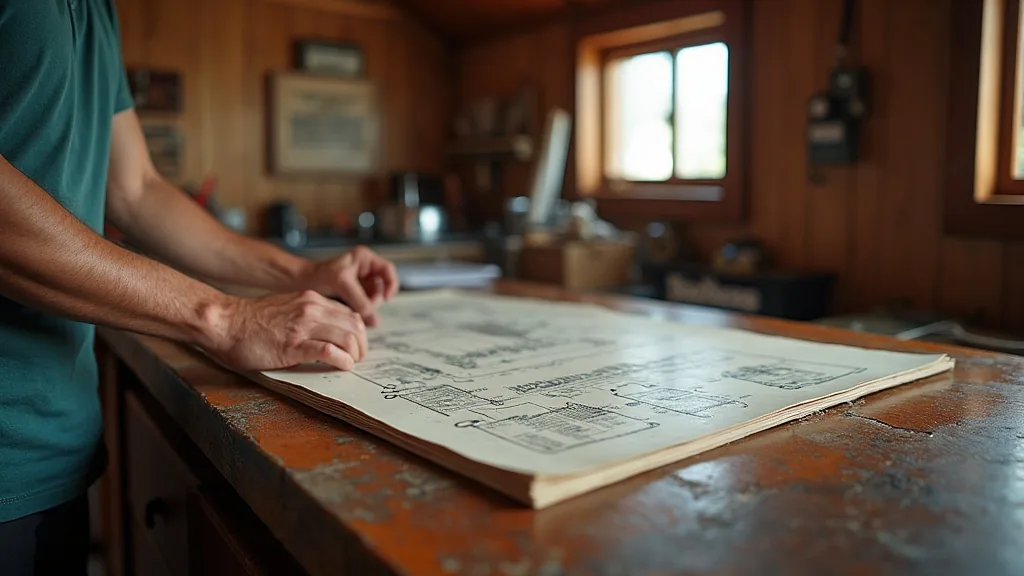
A liveaboard spec sheet answers three questions: how big is the boat, how many people share it, and what does the cabin you are buying actually look like. Tourism phinisi in Komodo run 25–50 m with 5–10 cabins and 8–18 guests; steel dive vessels run 25–40 m and 12–24 guests. Everything else follows from those numbers.
How to read a spec sheet in sixty seconds
Four figures tell you most of what you need before you look at a single photograph.
Guests divided by cabins gives you the average cabin occupancy. Under 2.2 means mostly doubles and twins; over 2.5 means bunk configurations and probably a younger, budget manifest.
Guests divided by crew is the clearest single proxy for service. Around 1:1 is a premium boat. Two guests per crew member is normal mid-market. Three or more and something is being economised.
Length divided by guests tells you about space. A 35 m boat carrying 12 guests feels entirely different from a 35 m boat carrying 22, and no interior photograph will convey that.
Tenders and compressors govern whether diving actually flows. One tender for 16 divers means waiting. Two compressors means a broken one is an inconvenience rather than the end of the trip.
Typical specifications by vessel class
| Specification | Classic phinisi | Premium phinisi | Steel dive liveaboard |
|---|---|---|---|
| Length overall | 25–32 m | 32–50 m | 25–40 m |
| Beam | 6–8 m | 8–10 m | 6–9 m |
| Hull | Ironwood / teak | Ironwood / teak | Steel or aluminium |
| Guest cabins | 4–6 | 5–10 | 6–12 |
| Max guests | 8–12 | 10–18 | 12–24 |
| Crew | 8–12 | 12–20 | 10–18 |
| Tenders | 1–2 | 2–3 | 2–3 |
| Compressors | 1–2 | 2 | 2 + nitrox membrane |
| Cruising speed | 7–9 knots | 8–10 knots | 9–12 knots |
Phinisi are traditional two-masted Indonesian schooners, historically built by Bugis and Konjo shipwrights, with hulls still laid down by hand at Bira and Tana Beru in South Sulawesi. That heritage is not decoration — it dictates the wide beam, the deep saloon and the enormous deck space that make these boats pleasant to live on.
Cabin tiers compared
| Tier | Deck | Typical size | Bed | Light | Bathroom | Price index | Motion felt |
|---|---|---|---|---|---|---|---|
| Superior / standard | Lower | 9–14 m² | Twin singles or bunk | Porthole or none | Ensuite, compact | 1.0× | Least |
| Deluxe | Main | 14–18 m² | Double or twin | Window | Ensuite | 1.2–1.4× | Low |
| Family / triple | Lower or main | 16–22 m² | Double + single, or 2+2 bunk | Window or porthole | Ensuite | 1.3–1.5× | Low |
| Master / suite | Upper or stern | 18–28 m² | King | Panoramic | Ensuite, bathtub on some | 1.5–1.8× | Most |
The counter-intuitive line in that table is the last one. The master suite is the most expensive cabin and it moves the most, because it sits highest and often furthest aft or forward. On a calm park itinerary that is irrelevant. On a Bali–Komodo crossing with two long overnight passages, it matters.
Deck by deck
Lower deck. Guest cabins, engine room, crew quarters. Closest to the waterline and the centre of buoyancy, so the least motion — and the most engine noise on passage. Best cabins for seasickness, worst for light sleepers.
Main deck. Saloon, dining, galley, usually the dive deck aft. This is where the trip happens. Check whether the dive deck has individual gear stations, a rinse tank for cameras separate from the mask tank, and a proper ladder rather than a rope.
Upper deck. Master cabins, lounge, sometimes a shaded bar. Best views, more motion.
Sun deck. Open, usually with loungers, occasionally a jacuzzi on premium tonnage. On an eight-day crossing this is the room everyone actually lives in, and its size is a better predictor of trip enjoyment than cabin square metres.
Phinisi or steel hull?
| Factor | Wooden phinisi | Steel dive liveaboard |
|---|---|---|
| Character and deck space | Significantly better | Functional |
| Dive logistics | Good on purpose-built boats, variable otherwise | Purpose-built, usually superior |
| Ride in swell | Rolls more; sails can steady her | Steadier, faster through weather |
| Speed | 7–10 knots | 9–12 knots |
| Nitrox availability | Less common | Common |
| Photography and camera stations | Varies | Usually dedicated |
| Best for | Mixed diver/non-diver, couples, charters | Dive-intensive itineraries, 4-dive days |
Neither is objectively better. If your trip is half sightseeing, half diving, a phinisi wins on liveability. If you are doing eighteen dives in six days with a camera, a steel boat’s dive deck will make your week easier.
Which cabin should you actually book?
- If you get seasick: lower deck, amidships, twin. Cheapest cabin on the boat and the one that moves least. Ask specifically for a midships position.
- If you travel solo: ask whether the operator runs a share-a-cabin match before you accept a single supplement, which typically adds 50–80 percent.
- If you bring children: family or triple cabins on the main deck — adjacency to the saloon matters more than the view.
- If it is a honeymoon: master suite, and accept the motion. See the site’s honeymoon page.
- If you are a photographer: whichever cabin is closest to the camera station and has the most usable power outlets. Ask for the socket type and count — it is rarely on the spec sheet.
For deeper cabin-by-cabin detail the site has a dedicated cabin types explainer and a budget-to-suite comparison. Charter buyers evaluating whole vessels should read the private charter page, and groups sizing a boat to a headcount the group charter page.
Included and excluded, and what to verify
Included on nearly every vessel: cabin with ensuite, all meals and snacks, drinking water, tea and coffee, tanks and weights, guided dives, tenders, crew.
Excluded on nearly every vessel: equipment rental, nitrox, alcohol, park and harbour fees, courses, gratuities, insurance.
Worth verifying before you pay: air conditioning hours (some boats run it only at night), hot water reliability, whether Wi-Fi exists at all — in most of the park it does not, and mobile signal is intermittent — power socket type and count, whether the boat carries a doctor or only oxygen and a first-aid-trained crew, life-raft capacity against maximum guests plus crew, and the date of the last seaworthiness clearance from the harbourmaster.
Frequently asked questions
How many guests is too many?
For diving, more than four divers per guide slows everything down. For living aboard, more than about 16 on a 35 m boat makes the sun deck crowded.
Which cabin is quietest?
Main-deck cabins away from the galley and the engine room. Lower-deck cabins are stable but hear the engine on night passages.
Do Komodo liveaboards have Wi-Fi?
Some advertise it; almost none deliver usable speeds inside the park. Assume you are offline for the duration and treat any signal as a bonus.
Is air conditioning standard?
In cabins, on most mid-range and premium boats, yes. Saloon air conditioning is less universal. Ask whether it runs 24 hours or only overnight when the generator is on.
What does “ensuite” actually mean here?
Usually a compact wet-room with a marine toilet, basin and shower head over the toilet. Separate shower cubicles appear from deluxe upward on larger boats.
How do I compare two boats quoting the same price?
Guests per crew, guests per guide, tender count, compressor count, cabin square metres and sun-deck size. Those six numbers separate boats that photograph identically.
Enquiries
Vessel allocation and full specification sheets for the boats covered here come from Komodo Luxury, operating from Labuan Bajo since 2015 under Juara Holding Group. Ask for the deck plan and spec sheet of the specific vessel before you pay a deposit — a reputable operator will send both without hesitation.
- WhatsApp: +62 811 3823 875
- Email: [email protected]
The site also maintains an overview of boats and phinisi cruises from Labuan Bajo for comparison shopping.