How to Vet a Komodo Liveaboard: A Practical Framework for 2026
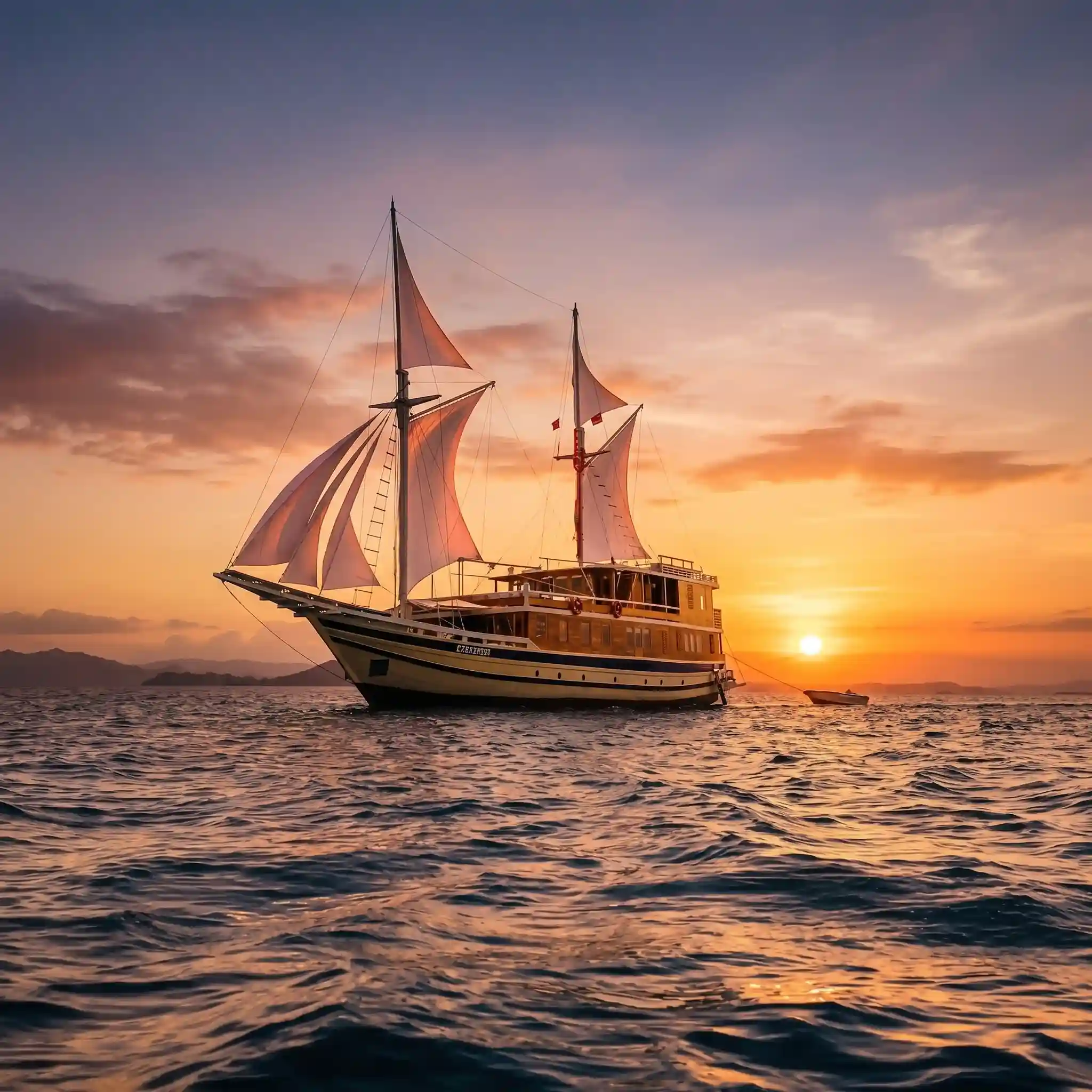
The email arrives in different clothing each week, but it is always the same email: “These two boats look identical in photos and the prices are USD 300 apart — which one is real?” It is the right instinct. The Komodo liveaboard fleet has grown so fast that glossy drone footage now tells you almost nothing about what you will actually board in Labuan Bajo. Two vessels can share the same photographer, the same colour grade, and the same adjectives, yet differ wildly in build quality, crew depth, and what happens when the weather turns.
So instead of reviewing one more boat this week, we are publishing the vetting framework we use internally before any vessel earns a writeup. It rests on five checkable pillars: launch year, gross tonnage, crew depth, safety equipment, and pricing that survives scrutiny. None of them require you to set foot on a deck. All of them can be verified from your sofa before you send a single dollar.
Make Someone Commit to a Launch Year
A phinisi’s launch date is the single most abused data point in this market. Wooden hulls are routinely described as “newly refitted” when the keel is fifteen years old, and some listings quietly blur the line between the year construction started and the year the boat first carried guests. Neither is fraud, exactly — but the difference matters for hull condition, engine hours, and how the interior has weathered three humid seasons.
Ask for the launch date in writing — month plus year. A serious operator answers in one line. If you get “recently launched” or a range, treat the newest photos on the listing as the boat’s true age and price accordingly. Cross-check the answer against the operator’s own specification page; when the two disagree, believe the more conservative figure.
Gross Tonnage: The Number Most Brochures Bury
Length sells, tonnage tells. A 37-metre boat can be a slender day-cruiser or a genuinely voluminous three-deck vessel, and the difference shows up in gross tonnage (GT). GT is a measure of enclosed volume, which in practice maps to cabin size, salon space, stability in a swell, and how crowded the sundeck feels when everyone comes up for sunset at Kalong.
As a rough editorial rule for the Komodo fleet: under 100 GT at 30+ metres suggests a narrow hull where interior space was sacrificed for profile; 150 GT and above at that length usually means real en-suite cabins and a salon you can sit in during rain. Tonnage is registered, not marketed — a boat either has the paperwork or it does not — which makes it one of the few numbers in this industry that cannot be improved in Photoshop.
Count the Crew Roles, Not the Heads
Do not just ask how many crew. Ask what roles exist. The gap between a good trip and a chaotic one is rarely the captain — it is whether there is a dedicated chef (not a deckhand pulling double duty at the stove), whether someone owns the guest schedule as a cruise director, and whether the guides are on the boat rather than subcontracted at each stop.
- Dedicated chef: three cooked meals a day for a full boat is a full-time job. If cooking is a shared duty, meal quality collapses by day two.
- Cruise director or trip leader: someone must reorder the itinerary when the ranger station is queued out or the wind shifts. On boats without one, that decision falls to the captain mid-manoeuvre.
- Guest-to-crew ratio: anything better than 2:1 guests-to-crew on a full departure is comfortable; worse than 3:1 and service becomes reactive.
Safety Equipment: Ask by Name, Not by Category
“Fully equipped for safety” is filler. The questions that separate maintained boats from hopeful ones are specific: Do you carry life rafts, and when were they last serviced? Is there a working VHF radio and AIS, or only mobile phones? Are life vests counted against maximum capacity, not average occupancy? Is the crew actually drilled, or is the equipment ornamental?
You will not be able to verify every answer remotely, but the texture of the reply is itself a signal. Operators who maintain their gear answer in specifics and quickly. Operators who do not will send you another photo of the sundeck.
Pricing That Survives Scrutiny
The last pillar is the least romantic and the most protective: published, itemised pricing. A trustworthy listing states per-person rates by cabin category for shared trips, a full package price for private charters, the cost per additional guest, and what is included versus excluded — park fees, drinks, tips. Vague “from” prices that never resolve into a table are how surprise invoices happen.
Watch the deposit terms too. Half up front with the balance due about a month before departure is the market norm; deposits in this region are almost universally non-refundable, so read the cancellation ladder before paying, not after. For a deeper walkthrough of matching boat class and budget to your group — solo joiner, couple, or full-boat charter — this comprehensive resource is the most systematic treatment we have seen, and it pairs well with the checklist you are reading now.
The Framework Applied: A VIP-Class Example
Frameworks are only useful if they survive contact with a real boat, so here is a live test from the VIP tier: Elbark Cruise, a VIP-bracket phinisi of 37 metres, operating out of Labuan Bajo. It passes the first four pillars cleanly on paper — a committed launch date of October 2022, a registered 167 GT on a 6.8-metre beam, nine en-suite cabins across three decks for up to 21 guests, and a 12-plus crew that carries its own chef plus a dedicated cruise director. Safety disclosure is specific rather than vague: marine-grade navigation, VHF radio, life rafts, life vests, and a trained team.
| Framework pillar | Elbark Cruise on paper |
|---|---|
| Launch year | October 2022, stated as month and year |
| Gross tonnage | 167 GT at 37 m — volume, not just length |
| Crew depth | 12+ crew incl. dedicated chef and cruise director |
| Safety gear | Named items: VHF, life rafts, life vests, navigation suite |
| Pricing | Full published tables, shared and private |
The pricing pillar is where it scores best, because everything is itemised. Shared 3D2N departures run every Friday with per-person rates set by cabin: USD 400 for Banda Neira or Savu porthole cabins, climbing to USD 700 in Misool, the master suite whose spec sheet lists balcony and jacuzzi. Private charters are quoted as complete packages for one to ten guests — USD 8,400 for 2D1N rising to USD 15,400 for 6D5N — with each additional guest priced at USD 300–400 depending on duration. That is exactly the shape of pricing this framework asks for: no ambiguity about what a dollar buys. Availability checks for this boat go straight to Komodo Luxury, its official booking house — [email protected], or WhatsApp +62 811 3823 875.
Five Emails to Send Before Any Money Moves
Copy these into your next enquiry, whatever the boat:
- What month and year was the vessel launched?
- What is the registered gross tonnage?
- How many crew sail on a full departure, and which roles are dedicated?
- When were the life rafts last serviced, and how many life vests are aboard relative to maximum capacity?
- Can you send the full price table, including per-person cabin rates, extra-guest charges, and everything excluded from the price?
Any operator worth your money answers all five in one reply, in writing, without changing the subject. The ones who cannot have told you everything you need to know — for free, and before the deposit left your account.
Keep Reading

Uncategorized
Komodo Liveaboard from Bali: Share vs Private Guide 2026
Most travellers starting in Bali reach Komodo National Park by flying roughly one hour to Labuan Bajo and boarding a…

Uncategorized
Bali + Komodo Liveaboard Combos for 2027: The 3-Nights-Bali, 3-Nights-at-Sea Blueprint
The most dependable Bali Komodo liveaboard combo for 2027 is a six-night split: three nights on land in Bali, a…

Uncategorized
Booking a Komodo Liveaboard from Bali? Verify the Labuan Bajo Operator First
Yes — you can arrange a Komodo liveaboard from Bali, and travellers do it every day through agencies, hotel desks,…