What is the Price of a Luxury Komodo Liveaboard from Bali?
- Vessel Caliber: Prices vary based on the vessel, from authentic Phinisi schooners to modern superyachts.
- Seasonality: Expect to pay a 15-25% premium during the peak dry season (April to October).
- Inclusions: The rate typically covers gourmet meals, diving, excursions, and a high crew-to-guest ratio.
The teak deck is warm underfoot, the air thick with salt and the promise of adventure. Aboard a traditional Phinisi schooner, a glass of chilled champagne in hand, the verdant coastline of Bali recedes as you chart a course eastward. You are not merely on a holiday; you are embarking on an expedition into one of the planet’s last wild frontiers. This journey, a seamless blend of old-world maritime romance and contemporary luxury, leads to the primeval realm of the Komodo dragon. But for the discerning traveler, the primary question is not one of desire, but of investment. Understanding the price of a luxury Komodo liveaboard from Bali requires looking beyond a simple number and appreciating the intricate of service, vessel, and experience that defines these exceptional voyages.
Deconstructing the Price Tag: What Are You Actually Paying For?
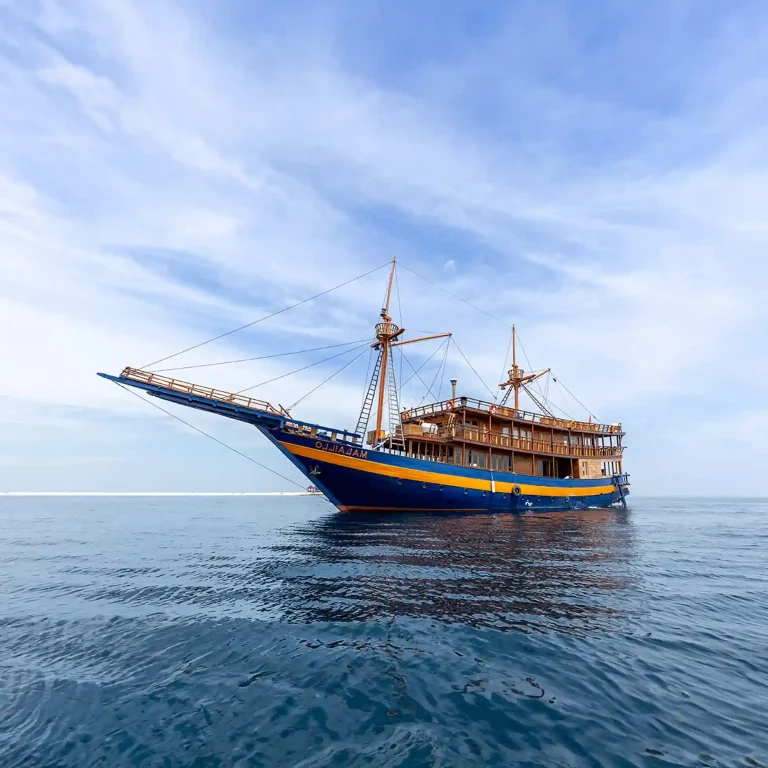
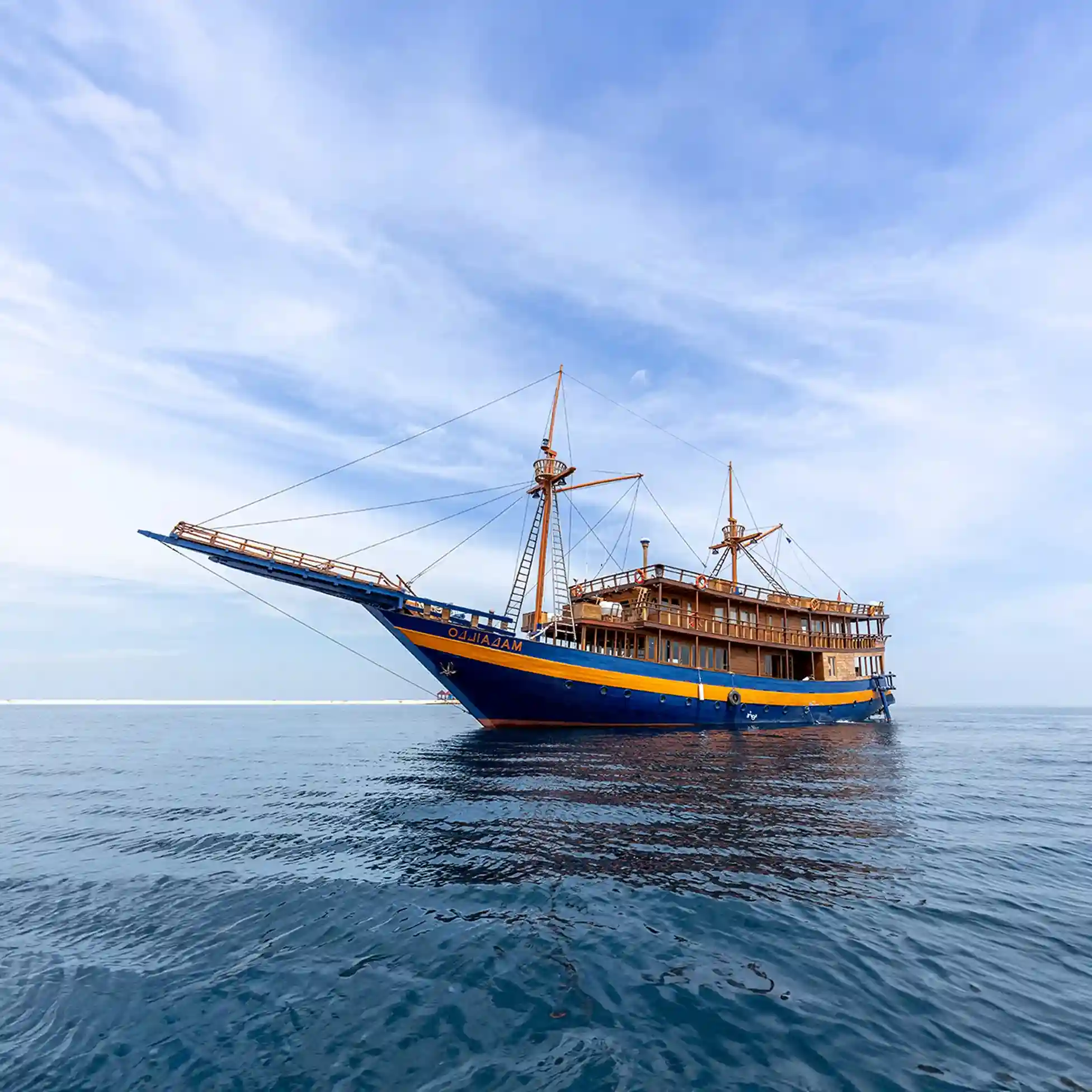
A common mistake is to view a liveaboard price as a simple nightly rate. This is a fundamental miscalculation. The figure on your invoice represents an all-encompassing expeditionary package, a curated experience where nearly every detail is managed for you. The core of this cost, naturally, is the vessel itself. We’re not talking about standard cruise ships; these are often handcrafted Indonesian Phinisi schooners, built from ironwood and teak using techniques passed down through generations. A vessel like the 45-meter Dunia Baru, for example, represents over 100,000 man-hours of artisanal construction. You are paying for the privilege of sailing on a piece of living history, outfitted with state-of-the-art navigation and safety equipment.
Beyond the timber and sails is the human element. A top-tier luxury liveaboard operates with a crew-to-guest ratio that often exceeds 1:1. This means a dedicated team—from the captain and cruise director to the private chef, dive masters, and hospitality staff—is there to anticipate your needs. I recall a conversation with a chef aboard one such vessel who sourced his yellowfin tuna directly from a local fisherman we passed at dawn; that evening, it was served as a sublime sashimi platter. This level of personalized service is a significant component of the cost. The price further includes three to four gourmet meals per day, an open bar with select wines and spirits, and all non-motorized water sports. Diving, the main event for many, is also inclusive, covering tanks, weights, and the expertise of PADI-certified guides who have logged thousands of hours in these challenging waters. For a more detailed look at what these trips entail, The Definitive Bali Komodo Liveaboard Guide offers a comprehensive overview.
The Spectrum of Luxury: From Boutique Phinisi to Superyacht Charters
The term “luxury” is not monolithic; it exists on a spectrum, and the price reflects its position on that scale. At the entry point of the luxury market, from roughly $4,500 to $6,500 per person for a 5-night trip, you will find exquisite boutique Phinisis. These vessels typically host 10 to 14 guests in 5 to 7 well-appointed, air-conditioned cabins with en-suite bathrooms. The experience is intimate and authentic, focusing on the destination with a high standard of comfort and service. The dining is excellent, the dive program is robust, and the crew is professional. What you might not find are the more extravagant amenities like dedicated spa rooms or expansive top-deck lounges.
Ascending to the premium luxury tier, priced between $6,500 and $10,000 per person, the vessels become larger and the amenities more lavish. These Phinisis or modern yachts might feature master suites with private balconies, extensive wine cellars, and perhaps a dedicated spa therapist or yoga instructor on board. The crew-to-guest ratio is even higher, and the culinary program may be overseen by a classically trained chef. This tier is for travelers who desire the adventure of Komodo without compromising on the facilities of a five-star resort. For those seeking the pinnacle of exclusivity, full private charters are the ultimate expression of luxury. A week-long charter of an elite vessel can range from $80,000 to over $200,000, accommodating 12 to 16 guests. At this level, the itinerary is fully bespoke, the menu is designed around your preferences, and the entire archipelago effectively becomes your private playground. The main hub for these departures is Labuan Bajo, a bustling port town that serves as the gateway to the islands, as detailed by Indonesia’s official tourism board.
Seasonality and Itinerary: How Timing and Route Affect Your Investment
The natural rhythms of the Indonesian archipelago play a significant role in determining the cost of your voyage. The prime window for exploring Komodo National Park is during the dry season, which typically runs from April through October. During these months, the seas are calm, the skies are clear, and underwater visibility can exceed an incredible 30 meters. This is peak season, and demand drives prices up by as much as 15% to 25% compared to other times of the year. Booking 9 to 12 months in advance is not just recommended; it’s often necessary to secure a cabin on a premier vessel.
The shoulder months of March and November can present a compelling value proposition. The weather is more variable, with a higher chance of rain showers, but the crowds are thinner and prices are more forgiving. For avid divers, the transition periods can also bring unique marine life encounters. The wet season, from December to February, sees the lowest prices but also the highest risk. Rough seas and heavy rainfall can impact itineraries and diving conditions, and many top-tier operators cease operations altogether during this period. The length of your journey is another critical price determinant. A 4-day/3-night “taster” trip will naturally cost less than a comprehensive 8-day/7-night expedition. However, the per-diem rate often decreases on longer voyages. A 7-night trip allows for a more relaxed pace and access to more remote dive sites and islands, delivering what many, myself included, consider a more complete Komodo experience. For a granular breakdown of seasonal pricing, our comprehensive pricing and cost guide is an invaluable resource.
The “Bali” Factor: Logistics of Starting Your Journey
The phrase “from Bali” in the target keyword is a crucial qualifier that requires clarification. While the journey’s soul begins the moment you decide to go, the physical voyage does not typically start from Bali’s Benoa Harbour. The vast majority of Komodo liveaboards, over 95% of them, depart from the port of Labuan Bajo on the western tip of Flores island. The “Bali” connection refers to the logistical starting point for most international travelers. Getting from Bali (Denpasar, DPS) to Labuan Bajo (LBJ) involves a short domestic flight, typically lasting between 60 to 90 minutes.
When evaluating the price, it is critical to understand if this flight is included. For most packages, it is not. Travelers are expected to book their own return flights on airlines like Garuda Indonesia or Batik Air, which can cost between $150 and $300 per person. I always advise clients to arrive in Labuan Bajo at least one day prior to their liveaboard departure. This builds in a buffer against flight delays, which are not uncommon in the region, ensuring you don’t literally miss the boat. Some ultra-luxury, all-inclusive bali komodo live aboard operators may arrange these flights as part of a seamless transfer package, including private car service in Bali and VIP airport assistance in Labuan Bajo. This convenience, of course, is factored into the higher overall price. Always confirm the exact point of departure and what transfers are included when you book your Komodo liveaboard.
Beyond the Sticker Price: Understanding Park Fees and Inclusions
A luxury liveaboard is largely an all-inclusive affair, but it’s essential to understand the fine print to avoid unexpected expenses. Your quoted price will almost certainly cover your accommodation, all meals and snacks, non-alcoholic beverages, and often local beer. The diving program, including tanks, weights, and guides, is also standard. However, several key items are typically priced separately. The most significant of these is the Komodo National Park entrance and conservation fee. This is a mandatory government levy that supports the preservation of this unique ecosystem, which is recognized as a UNESCO World Heritage Site. The fee structure can be complex and subject to change, but as of late, travelers should budget approximately $250 to $300 USD per person for a week-long trip. Your liveaboard operator will collect this, often in cash, before departure.
Crew gratuity is another major consideration. While discretionary, a tip of 10-15% of the charter cost is standard practice and deeply appreciated by the hard-working crew. On a $7,000 per person trip, this amounts to a significant $700 to $1,050. Premium alcoholic beverages, such as imported wines and spirits, are usually extra, as are gear rentals for specialized equipment like dive computers. Finally, comprehensive travel and dive insurance (like that from Divers Alert Network) are mandatory on all reputable vessels. These are not costs to be cut; they are essential protections for an investment of this magnitude and for your personal safety in a remote environment.
Quick FAQ: Your Komodo Liveaboard Price Questions Answered
Is a private charter more cost-effective for a group?
For groups of eight or more, a private charter can often be surprisingly cost-effective. When you divide the total charter fee (e.g., $90,000 for the week) by the number of guests (e.g., 12), the per-person cost can be less than booking individual cabins on a vessel of similar quality. It also offers exceptional privacy and itinerary flexibility.
Do I need to pay a deposit for a Komodo liveaboard?
Yes, standard industry practice requires a deposit to secure your booking. This is typically 30% to 50% of the total trip cost. The final balance is usually due 60 to 90 days before the departure date. This is because operators have to provision and staff the vessel far in advance.
Are flights from Bali to Labuan Bajo included in the liveaboard price?
In the vast majority of cases, no. Flights between Bali (DPS) and Labuan Bajo (LBJ) are considered a separate logistical step for the traveler to arrange. While some ultra-premium operators might offer to bundle this for an additional fee, you should assume it’s an extra cost unless explicitly stated otherwise.
What is a reasonable budget for crew tips?
The industry standard for gratuity is 10-15% of the trip price. For a trip costing $8,000 per person, a tip of $800 to $1,200 is appropriate. This is typically given to the cruise director at the end of the voyage, who then distributes it fairly among the entire crew, including the often-unseen engineers and kitchen staff who are integral to the experience.
The journey through the Komodo archipelago is an investment in an experience that is increasingly rare in our hyper-connected world. It is a chance to disconnect, to witness nature in its most raw and magnificent form, and to do so from a platform of exceptional comfort and service. The price reflects not just a cabin on a boat, but privileged access to a protected world, guided by experts and supported by a crew dedicated to making your expedition unforgettable. To explore the vessels and itineraries that make this possible, we invite you to begin your journey by discovering our curated fleet of bali komodo live aboard charters.
Keep Reading
Uncategorized
Komodo Liveaboard from Bali: Share vs Private Guide 2026
Most travellers starting in Bali reach Komodo National Park by flying roughly one hour to Labuan Bajo and boarding a…

Uncategorized
Bali + Komodo Liveaboard Combos for 2027: The 3-Nights-Bali, 3-Nights-at-Sea Blueprint
The most dependable Bali Komodo liveaboard combo for 2027 is a six-night split: three nights on land in Bali, a…

Uncategorized
Booking a Komodo Liveaboard from Bali? Verify the Labuan Bajo Operator First
Yes — you can arrange a Komodo liveaboard from Bali, and travellers do it every day through agencies, hotel desks,…