Komodo Liveaboard Dry Season vs. Rainy Season: A Guide
- Dry Season (April-Nov): Best for calm seas, diving visibility, and trekking.
- Rainy Season (Dec-Mar): Best for manta ray aggregations and fewer crowds.
- Shoulder Months (April, Nov): Offer a balance of good weather and fewer tourists.
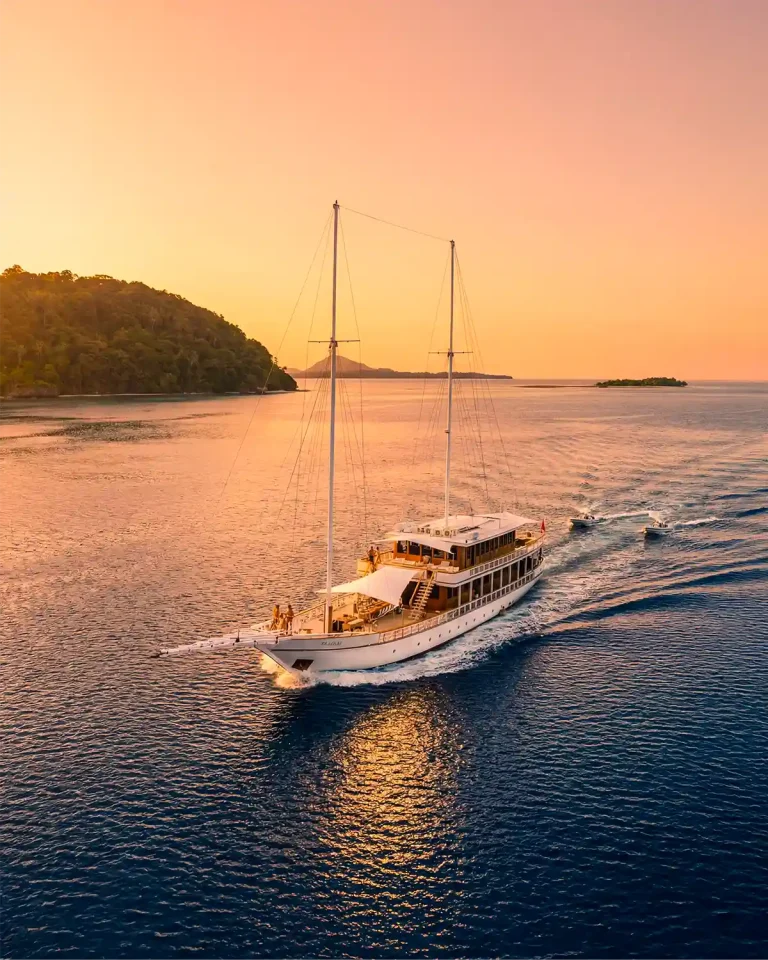
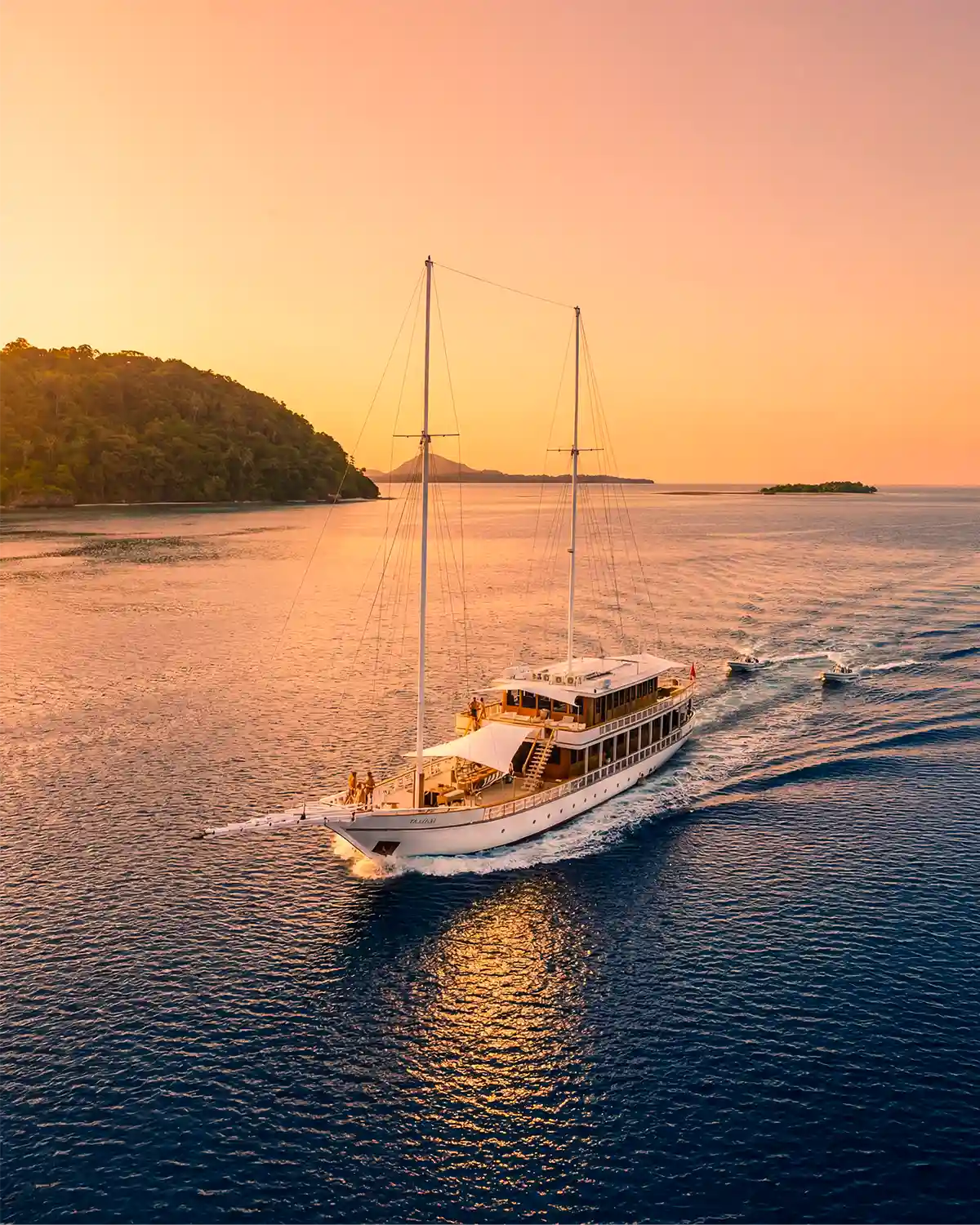
The air is thick with salt and the scent of sun-baked volcanic earth. Below the hull of the phinisi schooner, the Flores Sea shifts from sapphire to turquoise as it shallows over a reef. A shadow, impossibly large, glides beneath us—a manta ray, its seven-meter wingspan a promise of the world waiting below. This is the daily reality in Komodo National Park, a realm where the decision of when to visit isn’t about finding a ‘good’ time, but about choosing your kind of perfection. The eternal question we receive from our clients is about the timing: should one brave the rains for solitude or join the sun-seekers in the dry season? As editors who have charted these waters in every conceivable condition, we find the answer lies not in a simple date on a calendar, but in the specific of experiences you wish to weave. The debate of the Komodo liveaboard dry season vs rainy season is less a matter of right or wrong, and more a question of personal travel philosophy.
The Dry Season (April – November): The Archetypal Komodo Voyage
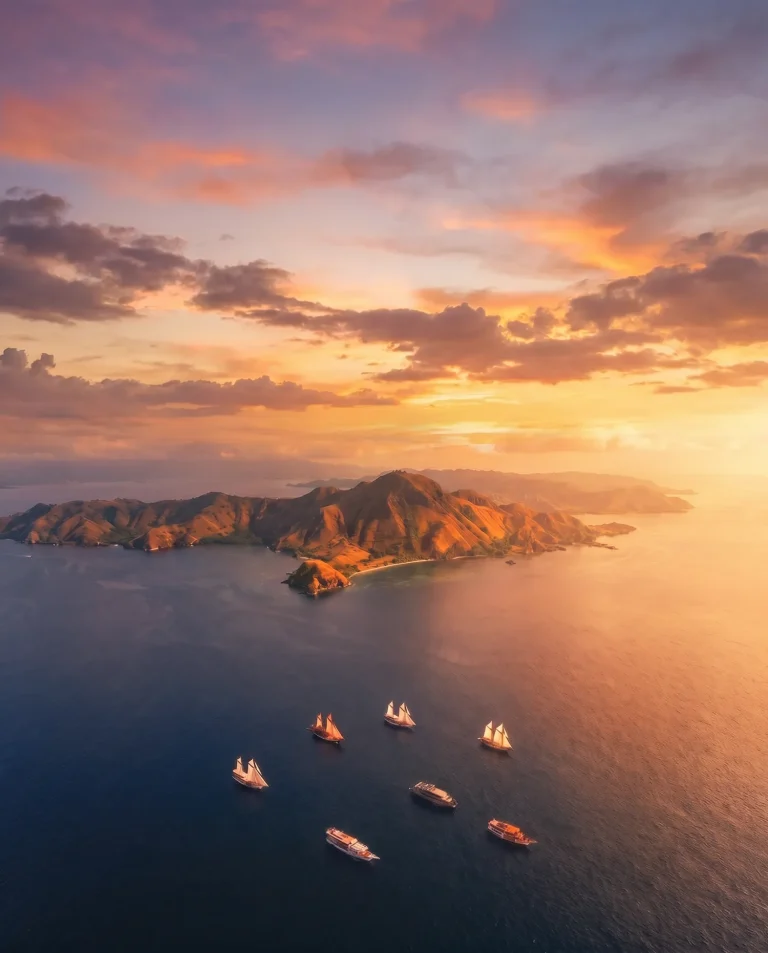
When most envision a bali komodo live aboard expedition, the postcard image that comes to mind is born from the dry season. Spanning from April through November, this period is characterized by near-endless sunshine, placid seas, and a landscape cured to a golden ochre. It is, unequivocally, the peak season, and for good reason. From a logistical standpoint, the experience is seamless. The waters of the Savu Sea are typically calm, making for smooth sailing between the park’s 29 islands. For divers, this is paradise defined. Water visibility frequently exceeds 30 meters, transforming dive sites like Batu Bolong and Castle Rock into veritable amphitheaters of marine life. The cooler, nutrient-rich waters from the south push in, and with them comes an explosion of activity. Our lead divemaster, Adi, who has logged over 5,000 dives in the park, notes that “from June to September, the sheer density of fish is staggering. You descend into a wall of fusiliers and anthias so thick you can lose sight of your buddy five feet away.” Water temperatures hover between a comfortable 26-29°C in the northern and central areas. This is also the prime time for on-land excursions. The trails on Rinca and Padar are dry and firm underfoot, and the Komodo dragons (Varanus komodoensis), a protected species within this UNESCO World Heritage Site, are often found conserving energy in the shade near waterholes, providing reliable sightings.
The Rainy Season (December – March): The Secret of the Green Isles
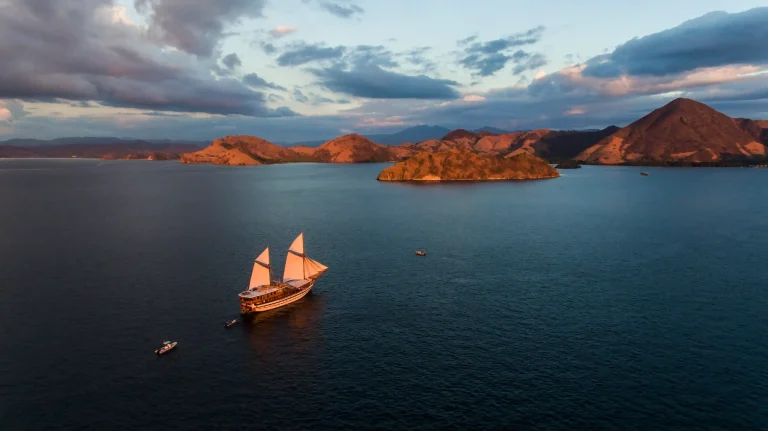
Dismissing the rainy season, or “wet season,” is a mistake made by the uninitiated. While the period from December to March does see an increase in precipitation—averaging over 200mm per month—it’s a world away from a monsoonal washout. The rain typically arrives in short, intense bursts in the late afternoon or overnight, leaving much of the day bright and clear. The reward for this meteorological gamble is a Komodo transformed. The sun-scorched hills of the dry season erupt into an impossible shade of emerald green, a landscape so vibrant it feels almost otherworldly. The most significant advantage, however, is the solitude. The park sees a fraction of the visitor numbers from the peak season; it’s not uncommon to be the only vessel at a top-tier dive site or mooring. For marine life aficionados, this season holds a particular allure: it is the absolute peak for manta ray congregations. Warmer waters bring a plankton bloom, attracting dozens of reef mantas to cleaning stations and feeding grounds like Manta Point (Karang Makassar). The experience of descending into a squadron of these gentle giants, gliding effortlessly in the current, is a memory that defines a lifetime of travel. While visibility can be reduced to 15-20 meters, the sheer spectacle of the megafauna more than compensates. It’s a different kind of expedition—one for the connoisseur who values unique encounters over predictable perfection.
Diving Conditions: A Tale of Two Currents
The core of any Komodo expedition is what happens beneath the waves, and the seasonal shift dramatically alters this underwater universe. The distinction between the Komodo liveaboard dry season vs rainy season is most palpable here. During the dry months (April-November), the influence of the Indonesian Throughflow brings cooler, clearer water up from the depths of the Indian Ocean. This results in the legendary visibility and a congregation of reef life. However, it can also amplify the park’s notoriously strong currents, particularly around the full and new moons. Sites in the south, like Manta Alley and The Cauldron, require a healthy respect for hydrodynamics and are best navigated with an experienced guide who understands the tidal charts implicitly. As we detail in The Definitive Bali Komodo Liveaboard Guide, choosing a vessel with a top-tier crew is non-negotiable for safety and access to the best sites. Conversely, the rainy season (December-March) sees warmer water temperatures, often reaching 30°C, and generally milder currents. This makes for more relaxed diving in many areas. The trade-off is the plankton-rich water, which, while reducing visibility, is the very thing that draws in the filter-feeding megafauna. It’s a classic choice: do you prefer the high-definition, wide-angle seascape of the dry season, or the dramatic, creature-feature encounters of the green season?
On-Land Exploration: Savanna vs. Jungle
The terrestrial experience in Komodo is just as compelling as the aquatic, and the seasons paint the iconic landscapes in entirely different palettes. The dry season is the Komodo of documentary fame. The islands of Padar, Rinca, and Komodo take on the appearance of a vast African savanna, with golden grasses covering the dramatic, undulating hills. The hike to the viewpoint on Padar Island, a quintessential Komodo pilgrimage, is arguably easier during this time, with solid ground and panoramic views that stretch for miles under clear blue skies. The stark, arid beauty is powerfully photogenic. The Komodo dragons, seeking respite from the heat, are often more predictable in their movements, congregating near the ranger stations or the few available water sources. Come the rainy season, this same landscape is unrecognizable. A near-instantaneous greening occurs, transforming the islands into lush, tropical idylls. The vibrancy is startling. Trekking can be more challenging, with trails that can become muddy and slippery, but the reward is a view that few visitors ever get to see. The dragons are still present, though they may be more dispersed throughout the now-verdant terrain. According to the official portal from Indonesia’s Ministry of Tourism, the park remains fully open year-round, and ranger-led treks continue daily, ensuring that no matter when you visit, the prehistoric encounters are always on the itinerary. The choice is aesthetic: the raw, sun-bleached grandeur of the dry season or the lush, secretive jungle of the wet.
Logistics, Availability, and Value: Planning Your Expedition
The practical considerations of planning your trip are heavily influenced by the seasonal calendar. The dry season, particularly the peak months of July and August, corresponds with European and North American summer holidays, leading to a surge in demand. For a premier vessel, it is not an exaggeration to say that charters are often booked 12 to 18 months in advance. The principle of supply and demand dictates that prices are at their highest during this period. For those with fixed travel dates, early planning is essential. You can explore options and book a Bali Komodo liveaboard directly through our booking portal, but we advise securing your preferred dates as soon as they are finalized. Conversely, the rainy season offers considerable advantages in flexibility and value. With fewer travelers in the region, there is greater availability, often with more attractive pricing. This can be the ideal time for a last-minute booking or for travelers who prioritize a more intimate experience without the flotilla of other boats. For a detailed breakdown of what to expect financially, our Bali Komodo Liveaboard Pricing & Cost Guide offers a transparent look at how seasonality and vessel choice impact your investment. The shoulder months—April, May, October, and November—can represent the perfect compromise, offering the pleasant weather of the dry season with slightly fewer crowds and more competitive pricing.
Quick FAQ: Your Komodo Questions Answered
Is Komodo National Park ever closed?
No, the park is open 365 days a year. While individual islands or sites may have temporary restrictions for conservation reasons, liveaboard operations run continuously. The seasonal weather patterns may influence itineraries, but they do not cause park-wide closures.
What is the single best month to visit Komodo?
While subjective, many Komodo veterans, including our captains, point to May. It sits just after the rains, so the islands are still vividly green, but the dry season’s calm seas and clear skies have arrived. You get the best of both worlds with fewer crowds than in July or August.
How rough are the seas in the rainy season?
While the seas can be choppier from December to February due to westerly winds, modern liveaboard vessels are large, stable, and designed for these conditions. Captains are experts at navigating to sheltered bays and protected dive sites, minimizing any discomfort. It’s rarely prohibitive, but if you are very prone to seasickness, the dry season is a safer bet.
Do I need a different wetsuit for each season?
Yes, it’s advisable. In the dry season, water in the south can drop to 22-24°C, making a 5mm wetsuit comfortable. In the rainy season, with water temperatures at 28-30°C park-wide, a 3mm shorty or even just a rash guard and shorts is often sufficient for most divers. Versatility is key.
Ultimately, the decision rests on a simple question: what does luxury mean to you? Is it the luxury of guaranteed sunshine and placid waters, shared with other discerning travelers? Or is it the luxury of solitude, of witnessing a top-tier destination in its most verdant, primal state, even if it means weathering a passing storm? Both seasons offer an exceptional journey into one of the planet’s last great wild places. The dragons will be waiting, the reefs will be teeming, and the volcanic islands will retain their timeless majesty. When you are ready to choose your adventure and explore the nuances of the ultimate bali komodo live aboard, our team is here to craft the perfect voyage, tailored not to the calendar, but to you.
Keep Reading
Uncategorized
Komodo Liveaboard from Bali: Share vs Private Guide 2026
Most travellers starting in Bali reach Komodo National Park by flying roughly one hour to Labuan Bajo and boarding a…
Uncategorized
Bali + Komodo Liveaboard Combos for 2027: The 3-Nights-Bali, 3-Nights-at-Sea Blueprint
The most dependable Bali Komodo liveaboard combo for 2027 is a six-night split: three nights on land in Bali, a…
Uncategorized
Booking a Komodo Liveaboard from Bali? Verify the Labuan Bajo Operator First
Yes — you can arrange a Komodo liveaboard from Bali, and travellers do it every day through agencies, hotel desks,…