Sustainable and Eco-Conscious Komodo Liveaboard Travel
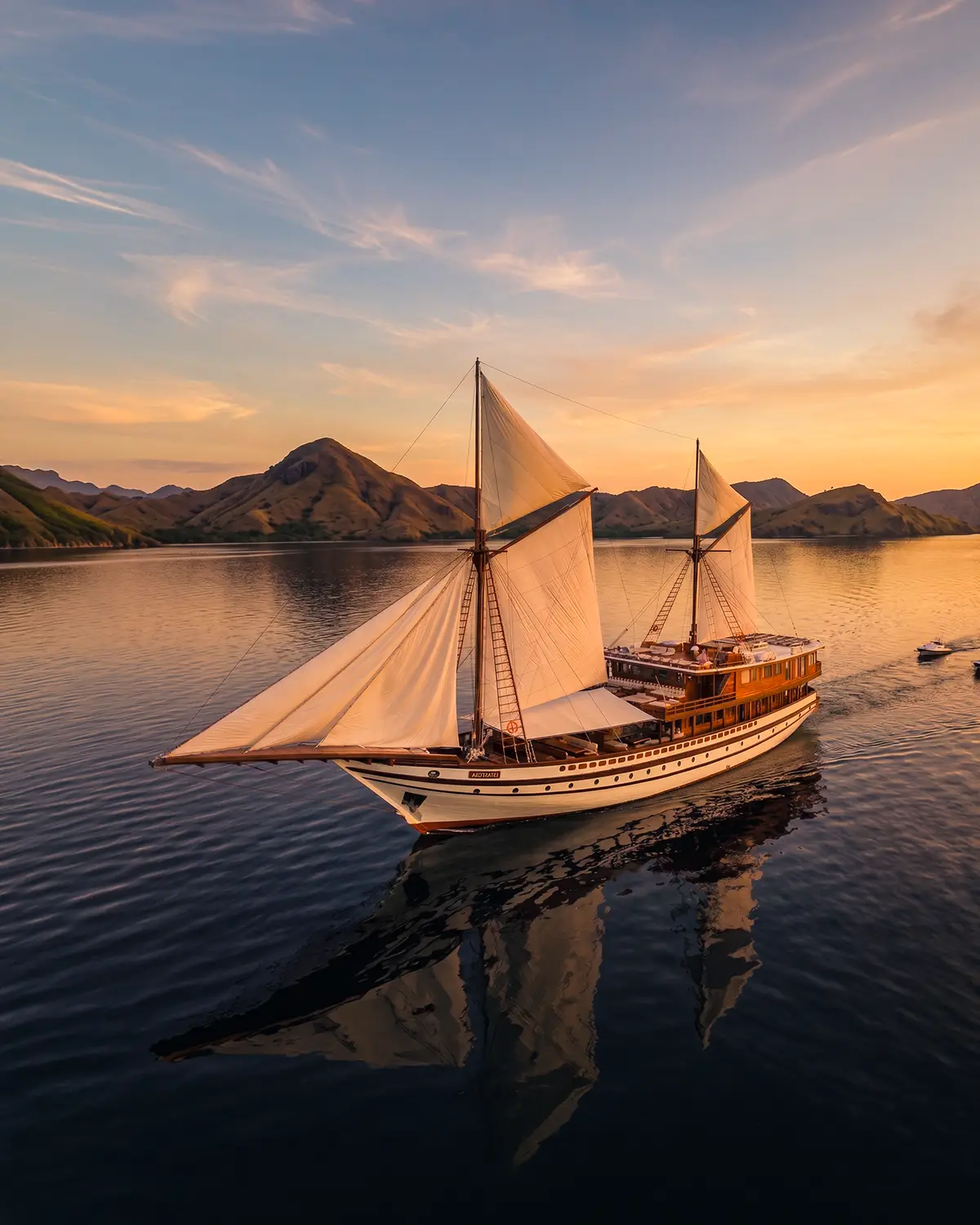
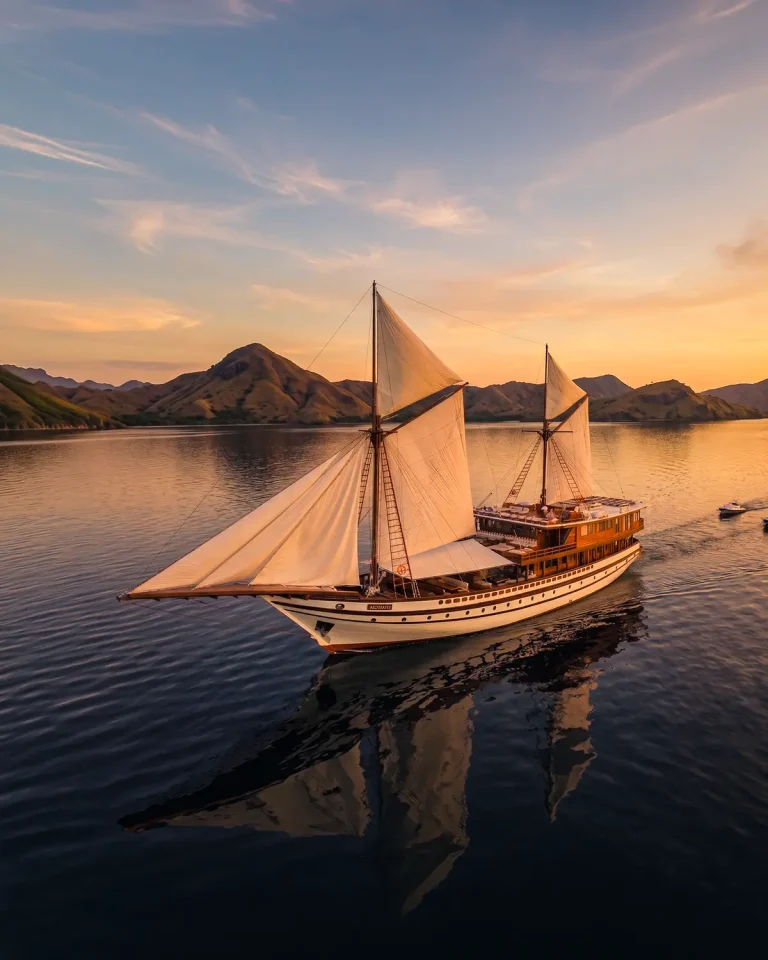
Eco-friendly Komodo liveaboard sustainable tourism means choosing a phinisi that runs reef-safe operations inside Komodo National Park: no-anchor mooring on sand, treated greywater, plastic-free galleys, ranger-guided dragon viewing, and a measurable conservation contribution from your park fees. Done right, a 2026 trip protects the reefs it shows you.
I have run more than 90 liveaboard departures out of Labuan Bajo since 2017, and I will say plainly that “eco” is the most abused word in this market. A boat can hang a recycling poster in the saloon and still drag a 40 kg anchor straight through a coral bommie at Batu Bolong. So this guide is about what actually moves the needle, with the specific practices, depths, months, and 2026 prices I use when I vet a vessel before I let a guest board it.
How Komodo liveaboards reduce plastic and protect reefs
The single biggest on-board change in the last three seasons has been killing single-use plastic. A well-run phinisi now carries a reverse-osmosis watermaker producing 1,500-3,000 litres a day, so every cabin has a refillable steel bottle instead of the old habit of 24 PET bottles per guest per week. On a 5-day, 4-night trip with 12 guests, that is roughly 280 plastic bottles kept out of the Flores Sea per departure. We also swap plastic straws for stainless, buy fish and produce in Labuan Bajo’s morning market in our own crates, and run a strict “nothing over the side” rule, organic scraps included, because food waste feeds the wrong things at anchorages.
Reef protection is mostly about how the boat stops moving. Anchoring is the quiet killer. Responsible operators use the fixed mooring buoys at the busy sites (Batu Bolong, Castle Rock, Crystal Rock, Manta Point) and, where none exist, drop only on open sand in 8-15 metres and never on reef. Reef-safe practices in Komodo National Park also extend to the dive itself: weight checks at the surface so divers are neutrally buoyant before they reach the wall, briefings that ban touching, gloves left in the bag, and reef-safe (non-oxybenzone) sunscreen handed out so chemical UV filters never wash off your skin onto the coral. If you want the site-by-site current and depth detail behind these rules, our Komodo liveaboard diving guide covers the wall profiles where buoyancy control matters most.
Responsible Komodo diving and manta ray ethics
Manta Point and Karang Makassar are the encounters everyone books for, and they are exactly where bad behaviour does the most damage. The mantas at Karang Makassar are Mobula alfredi, reef mantas, and they feed in a shallow current channel between 5 and 12 metres. The ethics are simple and non-negotiable on my boats: stay low and still on the sand, never chase, never swim above a manta (it reads an overhead shape as a predator), keep a 3-metre cushion, and absolutely no touching. A manta’s mucus layer is its immune barrier; one hand on it can open the skin to infection. We brief a maximum group size and stagger entries so a cleaning station is never crowded by 15 divers at once. The reward for restraint is real: when you hold position, the animals approach you, and a 4-metre manta gliding a metre over your head is the trip’s defining moment, earned the right way.
Ethical Komodo dragon viewing with local rangers
You cannot legally or ethically walk among Komodo dragons without a licensed park ranger, and you should not want to. On Rinca (the Loh Buaya station) and Komodo Island, rangers carry the forked tongkat staff, set the walking distance, and read dragon body language you cannot. The dragons are wild apex predators with a serrated bite and venom; the rangers are the reason guided treks have a clean safety record. Ethical viewing means short trekking groups, no feeding (staged “feeding shows” are banned and fund nothing good), keeping to the marked trails so you do not trample nesting mounds, and tipping your ranger directly. These rangers are local people from Flores and the park villages, and that income is part of the conservation economy that keeps the park staffed.
Conservation contribution: how your park fees work
Here is where your money becomes conservation. Komodo National Park entrance and activity fees are mandatory and, on a reputable liveaboard, already bundled into your package price. As a 2026 planning figure, budget around IDR 300,000-450,000 (roughly USD 19-29) per person per day for combined park entry, ranger, conservation and diving permit components, with the exact split varying by weekday versus weekend and how many islands you land on. A genuine eco operator shows you this line item rather than hiding it, and the better ones add a voluntary contribution to local NGOs that run mooring-buoy maintenance and reef cleanups. When you compare quotes, ask the operator to itemise the conservation contribution on a luxury liveaboard cruise; vagueness there is the clearest red flag I know.
| Sustainable practice | What to verify before booking (2026) |
|---|---|
| Reef-safe mooring | Uses fixed buoys or sand-only anchoring, never coral |
| Plastic reduction | Watermaker + refillable bottles, zero PET in cabins |
| Carbon offset | Verified offset offered (~USD 12-25 per guest per trip) |
| Park fees | Conservation contribution itemised, not hidden |
| Leave no trace | Pack-out policy on Padar, Pink Beach landings |
Carbon offset options for a Komodo liveaboard in 2026
A liveaboard burns diesel; pretending otherwise is greenwashing. The honest move is to measure and offset. A 4-day, 3-night Komodo route covers roughly 120-160 nautical miles, and a credible operator will offer a verified carbon offset, usually a Gold Standard or Verra-registered Indonesian project such as peatland or mangrove restoration, for about USD 12-25 per guest per trip. Newer vessels are cutting the footprint at source with solar arrays running the house electrics, lithium house banks, and slower cruising speeds between sites. Ask whether offsets are optional add-ons or built into the fare, and whether the boat reports its fuel burn. The operators who can answer precisely are the ones genuinely tracking it.
Leave-no-trace island landings
The land excursions, sunrise on Padar, the pink sand at Pantai Merah, the dragons on Rinca, are where careless crowds leave their mark. Leave-no-trace island landings in Komodo mean a strict pack-out: everything you bring ashore comes back to the boat, including organic waste. We land in soft-soled shoes, stay on the established Padar staircase rather than cutting new paths into the slope, and never collect shells, sand or coral fragments (it is illegal in the park and ecologically pointless). Pink Beach gets its colour from Homotrema rubrum, a red foraminifera, so taking “pink sand” home literally removes the thing you came to see. Snorkellers stay off the shallow coral, and we time popular landings early to avoid the day-boat crush from Labuan Bajo. The best window for all of this is the dry season, May through October, when seas are calmest and visibility on the dive sites runs 20-30 metres.
Frequently asked questions
Is an eco-friendly Komodo liveaboard more expensive?
Marginally. A genuinely sustainable 4D3N phinisi in 2026 runs from roughly USD 1,400 to USD 4,500 per person depending on cabin class, against USD 1,000-1,200 for a budget boat that often skips watermakers and moorings. The premium covers real equipment, not a label.
What is the best month for low-impact diving in Komodo?
May to October. Dry-season seas mean less anchoring disturbance, 20-30 metre visibility, and reliable manta feeding at Karang Makassar in the 5-12 metre range. April and November are quieter shoulder months with slightly higher swell.
Can I see Komodo dragons without harming them?
Yes, on a ranger-led trek on Rinca or Komodo Island. Stay in your group, keep to marked trails, never feed them, and tip your local ranger. That combination keeps both you and the dragons safe.
Plan a trip that protects what it shows you
Sustainability in Komodo is not a brochure word; it is a checklist you can audit before you pay a deposit. Reef-safe mooring, a real watermaker, ranger-led dragon treks, itemised park fees, an offset option, and a pack-out policy, those six answers tell you everything. Browse the full fleet and itineraries on our homepage, read our boat-level conservation policy on the sustainability page, and check the FAQ for booking and permit detail. When you are ready, message me directly and I will match you to a vessel that earns the word “eco”.
Keep Reading
Uncategorized
Komodo Liveaboard from Bali: Share vs Private Guide 2026
Most travellers starting in Bali reach Komodo National Park by flying roughly one hour to Labuan Bajo and boarding a…
Uncategorized
Bali + Komodo Liveaboard Combos for 2027: The 3-Nights-Bali, 3-Nights-at-Sea Blueprint
The most dependable Bali Komodo liveaboard combo for 2027 is a six-night split: three nights on land in Bali, a…
Uncategorized
Booking a Komodo Liveaboard from Bali? Verify the Labuan Bajo Operator First
Yes — you can arrange a Komodo liveaboard from Bali, and travellers do it every day through agencies, hotel desks,…