What is the Typical Bali to Komodo Boat Trip Route?
- The journey starts from harbors like Benoa in Bali or Labuan Lombok.
- Mid-voyage stops often include natural wonders like Moyo Island and Satonda’s crater lake.
- The final days are spent exploring the core Komodo National Park sites: Rinca, Padar, and Pink Beach.
The low, rhythmic thrum of the engine is the journey’s heartbeat. You feel it through the polished teak deck under your bare feet as the last lights of Bali’s Benoa Harbour recede into a velvet-black horizon. A warm, saline breeze carries the scent of frangipani and clove, a final farewell from the Island of the Gods. Ahead lies the open expanse of the Lombok Strait, and beyond it, an archipelago of volcanic sentinels and prehistoric realms. This is not merely a transfer from one island to another; it is a deliberate, unhurried immersion into the very soul of Indonesia. The classic bali to komodo boat trip route is a narrative written on water, a passage through time, and the ultimate expression of archipelagic exploration.
Deconstructing the Voyage: From Bali’s Shores to Komodo’s Realm
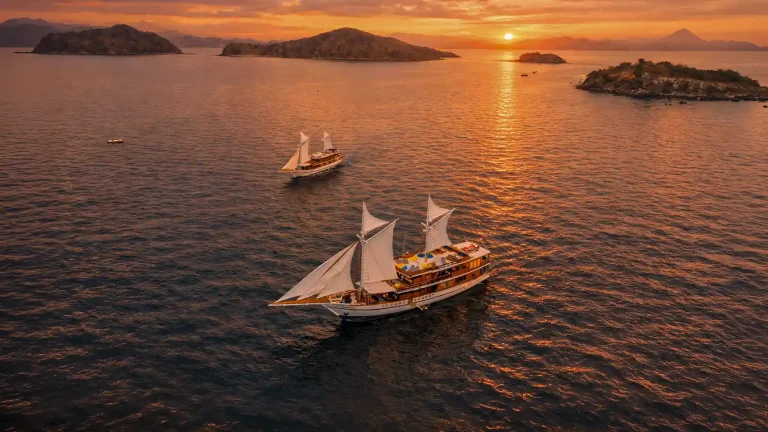
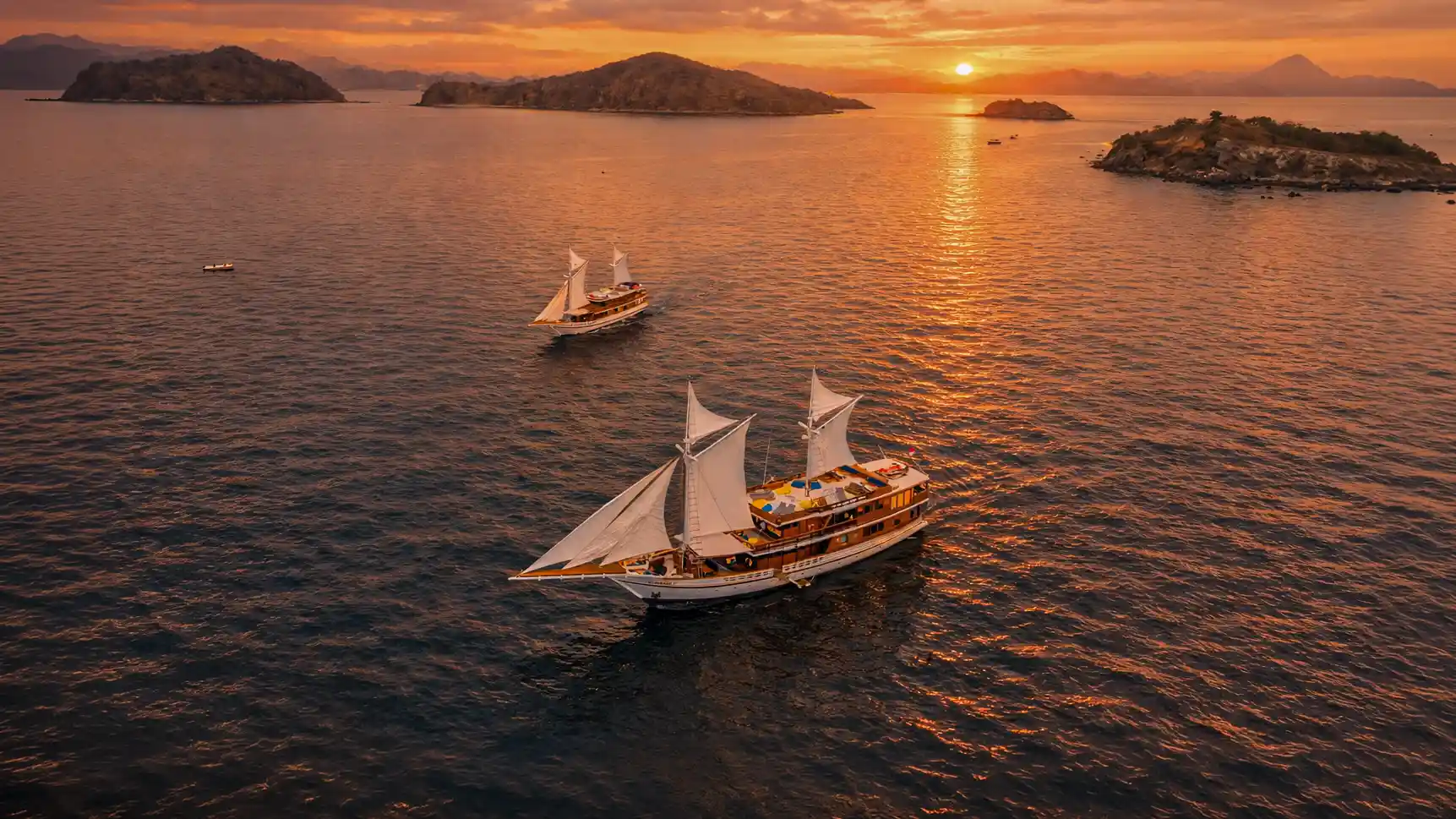
Embarking on a bali komodo live aboard is to choose a path less traveled, a deliberate departure from the well-trodden tourist circuit. The journey’s geography dictates its rhythm. Spanning approximately 250 nautical miles (around 463 kilometers), the route is a multi-day odyssey that typically lasts anywhere from four to eleven nights. The vessel is your sanctuary and your chariot—often a traditional Phinisi, a two-masted Indonesian sailing ship handcrafted from ironwood and teak. These are not just boats; they are floating boutique hotels, where luxury service meets the spirit of ancient maritime adventure. These routes are not new water. They follow the old trading passages between the islands — the same channels, read the same way — with a modern galley and air-conditioned cabins added behind the tradition. The starting point is a key logistical choice. While some voyages depart directly from Benoa Harbour in southern Bali, many operators streamline the initial leg by flying guests to Lombok, commencing the sea journey from there. This shaves off nearly a full day of open-water sailing across the often-turbulent Lombok Strait, allowing for more time exploring the islands that lie between Lombok and Komodo. To fully grasp the scope and nuance of such an undertaking, consulting a comprehensive resource is essential; our Definitive Bali Komodo Liveaboard Guide offers an in-depth look at what to expect from vessel to voyage.
The First Leg: Crossing the Wallace Line and Island Sanctuaries
As your vessel charts its eastward course, you are crossing more than just an ocean strait; you are traversing a profound biological boundary known as the Wallace Line. First identified by the naturalist Alfred Russel Wallace in 1859, this invisible demarcation separates the ecozones of Asia and Wallacea, a transitional zone between Asia and Australia. The shift is subtle at first, then dramatic. The lush, verdant landscapes of Bali and Lombok slowly give way to the drier, more rugged savannahs that characterize the islands closer to Komodo. This transition is a core part of the bali to komodo boat trip route experience. Your first significant landfalls are typically Moyo and Satonda Islands, off the northern coast of Sumbawa. Moyo Island is a protected nature reserve, a sanctuary of dense forest that hides pristine waterfalls like Mata Jitu, a terraced cascade of limestone pools made famous by a visit from Princess Diana in 1993. The hike to the falls is an immersion in sound—the buzz of insects, the call of exotic birds, and the rush of cool, fresh water. Nearby, Satonda Island presents a geological marvel: a saline crater lake. The island is a small, collapsed volcano whose caldera was filled with seawater following the cataclysmic 1815 eruption of Mount Tambora, an event so powerful it altered global climate for years. According to Indonesia’s official tourism site, the lake’s high salinity makes for an unusually buoyant swim, a surreal experience a volcano.
Into the Wild: Gili Banta and the Gateway to Komodo
After the tranquil interludes of Moyo and Satonda, the journey pushes further east into wilder, more remote territory. The next key waypoint is Gili Banta, a large, uninhabited island that serves as the western gatekeeper to the Komodo National Park archipelago. This is where the true sense of expedition takes hold. Gili Banta is raw and imposing, its sun-scorched hillsides of golden grass plunging into deep blue waters. There are no villages, no warungs, only the stark beauty of a land shaped by volcanic forces and powerful ocean currents. For scuba divers, this is a legendary stop. The underwater topography is a dramatic collection of sheer walls, pinnacles, and sloping reefs. Sites like “GPS Point” and “Tanduk Rusa” are notorious for their thrilling currents, which can exceed 8 knots, attracting a staggering concentration of marine life. It’s here that you have your first real chance of encountering pelagic giants: schools of barracuda numbering in the hundreds, grey reef sharks patrolling the drop-offs, and the first majestic manta rays gliding effortlessly against the flow. Our divemaster, Anton, a man with over 5,000 dives in these waters, calls it “the ocean’s grand central station.” Even for non-divers, the island offers spectacular trekking opportunities, with rewarding views from its ridgelines that stretch across the Sape Strait towards the distant, hazy outlines of Komodo Island itself. This is the final frontier before entering the park’s core zone.
The Crown Jewel: Navigating Komodo National Park
Entering the protected waters of Komodo National Park feels like arriving at a lost world. The park, established in 1980 and designated a UNESCO World Heritage Site in 1991, covers 1,733 square kilometers of land and sea. The itinerary here is a carefully curated highlight reel of the planet’s most extraordinary natural encounters. The primary objective, of course, is to see the Komodo dragon (Varanus komodoensis). Guided treks on both Rinca and Komodo islands offer the best and safest opportunities. Accompanied by expert local rangers, you walk through arid forests and savannah, where these apex predators, capable of growing up to 3 meters in length, can be seen basking in the sun or lumbering towards a waterhole. The experience is primal and unforgettable. But the park’s wonders extend far beyond its famous lizards. A pre-dawn trek up Padar Island is a rite of passage. The 45-minute climb to the summit reveals one of Indonesia’s most iconic vistas: a panorama of three distinct bays, each with a different colored beach—one white, one black, and one a soft pink. That famous pink hue is found in its most concentrated form at Pantai Merah, or Pink Beach. The color comes from microscopic red organisms called Foraminifera that live on the coral reefs and are washed ashore. Snorkeling here, in the turquoise water over the pink sand, is simply sublime. The underwater spectacle culminates at Manta Point (Karang Makassar), a vast, shallow channel that serves as a cleaning and feeding station for dozens of giant oceanic manta rays. Watching these gentle giants, with wingspans reaching up to seven meters, queue up to be cleaned by tiny wrasse is one of the most moving experiences the ocean has to offer.
The Reverse Itinerary and Logistical Considerations
While the classic narrative follows an eastward trajectory from Bali, it’s equally common to experience the bali to komodo boat trip route in reverse. This alternative involves flying directly into Labuan Bajo (LBJ), the bustling harbor town on the western tip of Flores that serves as the primary hub for Komodo tourism. From there, you board your liveaboard and sail west, culminating your journey in Lombok or Bali. This option holds significant appeal for travelers who are short on time or wish to maximize their immersion within the park itself, dedicating the bulk of their days to Komodo’s core sites before the long, open-water sail back. There are trade-offs to consider. The reverse route front-loads the adventure, but ends with one to two full days of sailing, which can feel anticlimactic for some. Conversely, the eastward route builds anticipation, saving the park’s main attractions for the grand finale. The choice often comes down to personal preference and flight availability. Financially, the costs can also vary. Factoring in one-way flights to Labuan Bajo and the specific liveaboard operator’s pricing structure is crucial for accurate budgeting. For a detailed breakdown of expenses, from park fees to vessel tiers, our Bali Komodo Liveaboard Pricing & Cost Guide provides essential financial clarity for planning your expedition. Ultimately, whether sailing east or west, the chain of islands remains the same magnificent spectacle.
Quick FAQ: Your Bali to Komodo Boat Trip Route Questions Answered
details of this expedition can feel as complex as the archipelago itself. Here are some quick answers to the most common questions we receive from our readers at Departures.
What is the best time of year for this trip?
The prime window is during the dry season, which runs from April through December. For the absolute best conditions—calmest seas, maximum underwater visibility (often exceeding 30 meters), and sunny skies—aim for the period between June and September. This is peak season, so it’s advisable to book your Bali Komodo liveaboard well in advance.
How long does the boat trip from Bali to Komodo actually take?
The duration is highly dependent on the itinerary. A direct, one-way transit can be done in as few as 4 days and 3 nights, focusing on the highlights. However, more comprehensive expeditions that allow for a deeper exploration of intermediate islands like Moyo and Banta, plus more dive or snorkel sites within the park, typically range from 7 to 11 nights.
Is the crossing from Lombok to Komodo rough?
The open sea sections, particularly the Lombok and Sape Straits, can be subject to strong currents and swell. Luxury phinisi schooners are large, stable vessels designed for these waters. However, if you are prone to motion sickness, it’s wise to come prepared with medication. Once inside the Komodo National Park, the waters are generally much calmer as you are sailing between islands.
Do I need to be a certified diver to enjoy the trip?
Absolutely not. While Komodo is a world-renowned diving destination, the snorkeling is equally spectacular. Sites like Pink Beach and Manta Point offer incredible encounters just below the surface. All itineraries are balanced with land-based activities like trekking on Padar, Rinca, and Moyo islands, ensuring a rich experience for everyone, regardless of their diving certification.
The journey from Bali to Komodo is far more than a simple boat trip; it is an expedition that charts a course through Indonesia’s staggering biodiversity, its unique geology, and its rich maritime heritage. It’s a voyage that trades fleeting moments for deep, resonant experiences—the silence of a sunrise over Padar, the powerful presence of a Komodo dragon, the silent ballet of manta rays below. This is travel at its most elemental and most profound. To your own passage through this prehistoric paradise and discover the pinnacle of Indonesian exploration, we invite you to explore our fleet and begin planning your bespoke bali komodo live aboard adventure.
Keep Reading
Uncategorized
Komodo Liveaboard from Bali: Share vs Private Guide 2026
Most travellers starting in Bali reach Komodo National Park by flying roughly one hour to Labuan Bajo and boarding a…
Uncategorized
Bali + Komodo Liveaboard Combos for 2027: The 3-Nights-Bali, 3-Nights-at-Sea Blueprint
The most dependable Bali Komodo liveaboard combo for 2027 is a six-night split: three nights on land in Bali, a…
Uncategorized
Booking a Komodo Liveaboard from Bali? Verify the Labuan Bajo Operator First
Yes — you can arrange a Komodo liveaboard from Bali, and travellers do it every day through agencies, hotel desks,…