Komodo Liveaboard Cabins Explained: Budget Bunks to Luxury Suites
- Cabins range from multi-bunk dorms to lavish master suites with balconies.
- Air conditioning is standard on most modern and mid-to-luxury Komodo liveaboards.
- Solo travelers frequently book shared cabins, fostering community among guests.
The morning sun, a warm presence, filters through the porthole, casting shifting light across the cabin as the rhythmic sway of the Komodo liveaboard begins. The scent of salt and brewing coffee drifts in, a signal that another day of exploration among volcanic islands and vibrant reefs is about to unfold.
What cabin options are available on Komodo liveaboard boats?
Komodo liveaboard cabin types span a broad spectrum, accommodating every traveler from the budget-conscious backpacker to those seeking ultimate indulgence on the high seas. On the more economical end, travelers often find shared cabin Komodo liveaboard options, typically configured as dormitory-style rooms with four to eight bunk beds. These budget dorm Komodo liveaboard cabins are a popular choice for solo travelers or groups of friends, offering a cost-effective way to experience Komodo National Park, a UNESCO World Heritage Site renowned for its endemic Komodo dragons and rich marine biodiversity. These shared spaces prioritize functionality, often featuring basic bedding, storage lockers, and sometimes a shared bathroom located nearby. While less private, they foster a communal atmosphere, ideal for forging new connections during a 3-day/2-night or 4-day/3-night itinerary.
Moving up the scale, standard Komodo liveaboard cabins typically offer more privacy, often as twin or double cabin Komodo configurations. A twin cabin usually features two single beds, making it suitable for friends or individuals who prefer their own sleeping space. A double cabin, conversely, presents one larger bed, ideal for couples. These cabins might be found on the lower deck for stability, often with portholes offering glimpses of the passing seascape. While some standard cabins may have shared bathroom facilities, many mid-range Komodo liveaboard vessels now offer the convenience of an ensuite cabin Komodo boat, providing a private toilet and shower within the cabin itself. These options represent a comfortable middle ground, balancing privacy and amenities without reaching the pinnacle of luxury. Vessels sailing from Labuan Bajo, the gateway to Komodo, frequently offer these diverse cabin types, ensuring a suitable match for the approximately 40,000 international visitors who journey to the park annually.
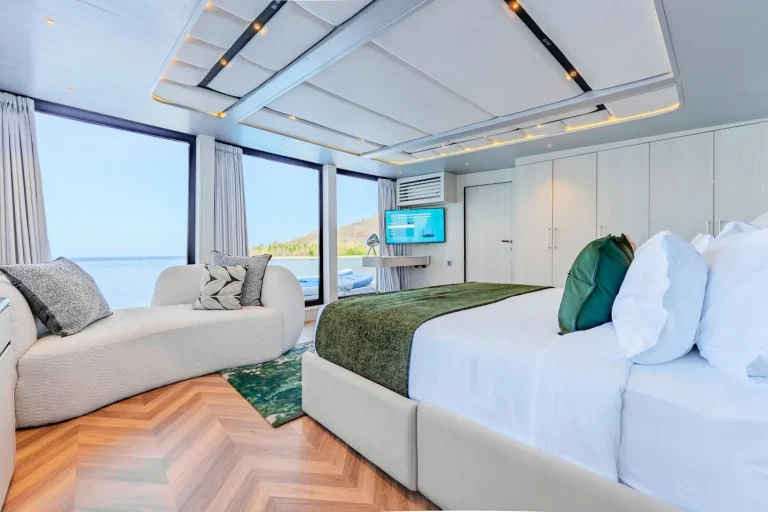
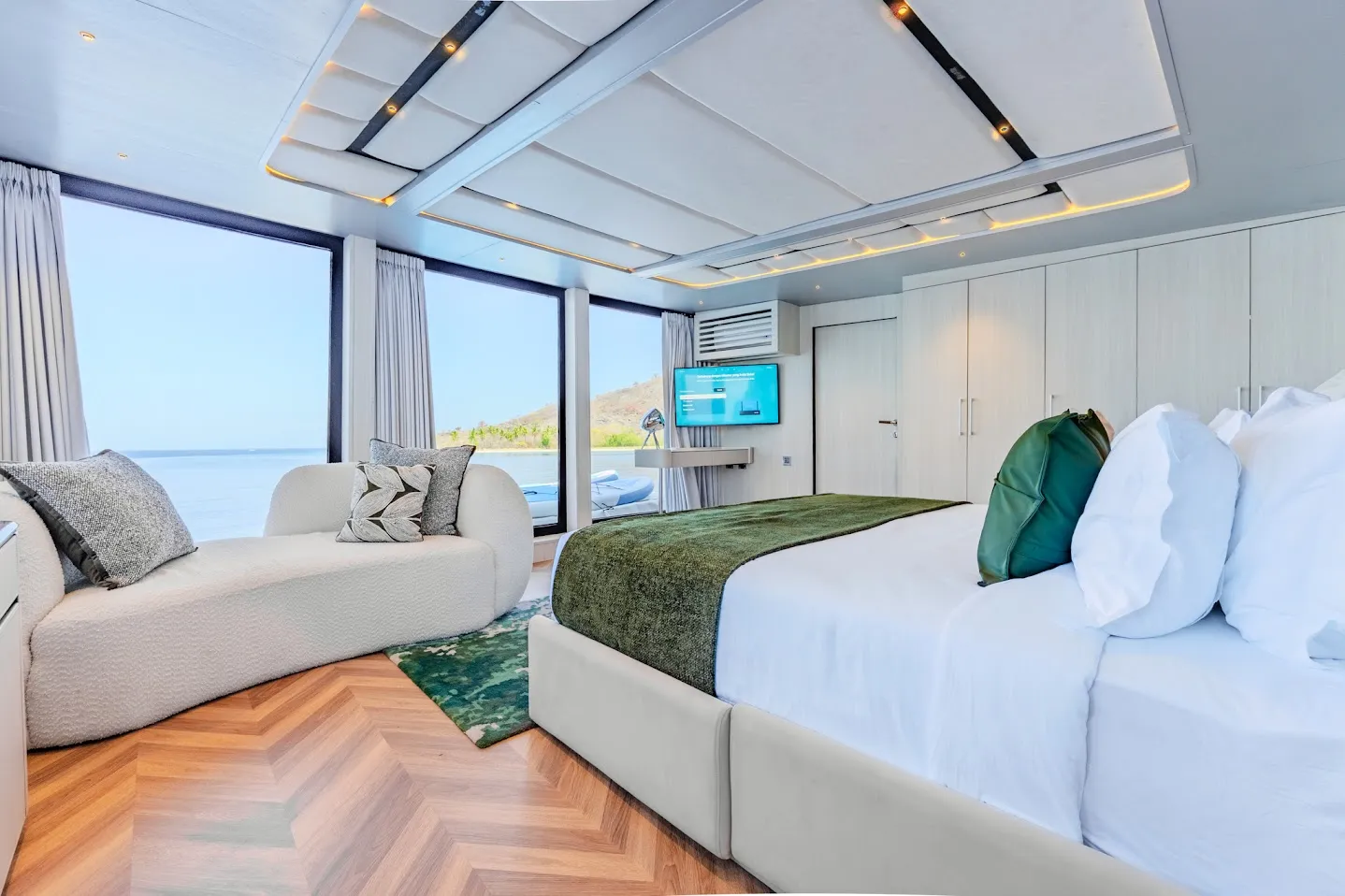
At the pinnacle of maritime comfort are the luxury suite Komodo phinisi cabins. These are typically found on larger, meticulously crafted traditional Indonesian phinisi boats or modern yachts, offering expansive spaces, premium finishes, and often dedicated amenities. A luxury suite on a Komodo liveaboard might feature a king-sized bed, a private lounge area, and a spacious ensuite bathroom with high-end fixtures. Many top-tier suites also include private balconies, providing an exclusive vantage point for viewing sunsets over Padar Island or watching manta rays glide near Manta Point. These cabins are designed for discerning travelers, offering an exceptional level of comfort and service during a journey that might extend to 6 nights/7 days, covering destinations like Rinca, Pink Beach (Pantai Merah), and Gili Lawa. Prices for such luxury accommodations can range significantly, with budget dorms starting around USD 150-250 per person per night (IDR 2.3M – 3.8M), while a luxury suite can command USD 700-1500+ per person per night (IDR 10.8M – 23M+), reflecting the superior space, amenities, and personalized service.
Are Komodo liveaboard cabins air-conditioned?
Yes, the majority of Komodo liveaboard cabins, especially those on modern vessels and mid-to-luxury phinisi boats, are air-conditioned, providing a crucial escape from the equatorial heat. The climate in Komodo National Park, particularly during the dry season from April to December, can be quite warm, with average temperatures often hovering around 30-32°C (86-90°F). Having an AC vs fan cabin Komodo option is a significant comfort factor, allowing guests to relax and recharge in a cool environment after a day of trekking on Komodo Island to see the dragons or snorkeling in the vibrant reefs around Kanawa. Air conditioning is generally standard in all private cabins—be it twin, double, or luxury suites—and increasingly common even in shared dormitories on newer or renovated Komodo liveaboard vessels.
While air conditioning is prevalent, the type and efficiency can vary. Some boats offer individually controlled AC units in each cabin, allowing guests to set their preferred temperature. Others may have central air conditioning with fixed settings. It is always prudent to confirm the specific AC setup when booking your Komodo liveaboard. For guests on more traditional or budget-friendly boats, a fan cabin Komodo might be the primary cooling option. While not as effective as air conditioning, fans do provide air circulation and can offer relief, especially if the cabin has good natural ventilation from portholes or hatches. However, for optimum comfort, particularly for those sensitive to heat or humidity, an air-conditioned cabin is highly recommended. The power for air conditioning on liveaboards is typically generated by the boat’s engines or generators, which usually operate at specific times, often running throughout the night and during certain periods of the day when guests are not actively exploring. This ensures a comfortable sleeping environment and a cool retreat during downtime, making the overall Komodo liveaboard experience more enjoyable.
Do all Komodo cabins have private bathrooms?
No, not all Komodo cabins have private bathrooms; the availability of an ensuite cabin Komodo boat facility is a key differentiator in liveaboard categories and pricing. On budget-friendly Komodo liveaboard vessels, particularly those offering shared dormitories or basic twin/double cabins, guests often utilize shared bathroom facilities. These typically consist of multiple showers and toilets, maintained regularly by the crew, and are communal for a section of the boat’s cabins. While this setup requires a degree of adaptability, it is a common arrangement for travelers prioritizing cost-effectiveness, allowing them to experience the wonders of Komodo National Park, which covers approximately 1,733 square kilometers of land and marine area, at a more accessible price point.
As one moves to mid-range and luxury Komodo liveaboard options, the presence of a private bathroom, or an ensuite cabin Komodo boat, becomes increasingly standard. A private bathroom typically includes a toilet, a shower (often with hot and cold fresh water), and a sink, all within the confines of your cabin. This offers exceptional convenience and privacy, a significant comfort after a day of diving in sites like Manta Point or hiking Padar Island’s iconic viewpoint. For many travelers, the ability to shower and prepare in privacy is a non-negotiable aspect of their Komodo liveaboard experience. Vessels specifically catering to divers, for instance, often ensure ensuite facilities to provide comfort after multiple PADI-certified dives. When planning your Komodo liveaboard trip, checking the cabin specifications for bathroom facilities is crucial. While shared bathrooms are perfectly functional and clean on reputable vessels, an ensuite cabin offers an elevated level of personal comfort and is a common feature on deluxe twin or double cabin Komodo arrangements and virtually all luxury suite Komodo phinisi options.
Can solo travelers book a shared cabin on a Komodo liveaboard?
Yes, solo travelers can absolutely book a shared cabin on a Komodo liveaboard, and it is a popular and recommended option for those embarking on an adventure to Komodo National Park independently. Booking a shared cabin Komodo liveaboard is not only a cost-effective solution compared to reserving an entire private cabin, but it also provides an excellent opportunity to meet like-minded individuals and build camaraderie during the journey. These cabins are typically dormitory-style, with bunk beds, accommodating anywhere from four to eight guests. They are designed to be functional and communal, fostering an environment where friendships often blossom over shared meals and daily excursions to iconic sites like Pink Beach or the Komodo dragon habitat on Rinca Island.
Many Komodo liveaboard operators specifically cater to solo travelers by offering “per-person” rates for shared cabins, ensuring that individuals can join a trip without paying a single supplement for a private room. This arrangement makes the Komodo liveaboard experience, which typically involves navigating 30-40 nautical miles (55-74 km) from Labuan Bajo into the park, accessible to a wider audience. While privacy is reduced in a budget dorm Komodo liveaboard, the social benefits often outweigh this for many solo adventurers. Guests share stories from their travels, plan future excursions, and often become a close-knit group by the end of a 3-day/2-night or 4-day/3-night itinerary. For solo travelers interested in diving, shared cabins also mean ready dive buddies and shared experiences exploring the vibrant underwater world, home to over a thousand species of fish and hundreds of coral types. When considering a Komodo liveaboard, inquire about shared cabin availability and the demographic of fellow travelers, as some boats attract a younger, backpacker crowd, while others might appeal to a more diverse age range, all seeking the unique allure of Komodo.
Selecting the Best Cabin Location on Your Komodo Liveaboard
Choosing the best cabin location on liveaboard vessels can significantly impact your comfort and overall experience through the Komodo archipelago. Generally, cabins are situated on different decks and in various positions relative to the boat’s bow (front) and stern (back), each with its own advantages and considerations. Cabins located on the main or upper decks often benefit from larger windows or direct access to outdoor spaces, providing superior natural light and expansive views of the passing landscapes, from the savanna hills of Padar to the clear waters around Manta Point. These locations are particularly sought after for their scenic appeal, allowing guests to wake up to a panorama of volcanic islands and turquoise seas. However, cabins closer to the bow might experience more motion in rougher seas, an important factor for those prone to seasickness, while stern cabins can sometimes be subject to engine noise, especially when the boat is underway or the generator is running.
Conversely, cabins located on the lower deck, often below the waterline, typically offer greater stability in choppy conditions, making them an excellent choice for guests concerned about motion sickness. These cabins usually feature portholes rather than large windows, offering less natural light but providing a cozy, secure feeling. They are also generally quieter in terms of deck activity above, though engine noise might be more noticeable in some stern-located lower deck cabins. When selecting a twin vs double cabin Komodo, consider if it is placed mid-ship; this area generally experiences the least amount of pitch and roll, offering the smoothest ride regardless of deck level. For a luxury suite Komodo phinisi, the best cabin location on liveaboard often means a spacious upper deck placement with a private balcony, maximizing views and privacy. Ultimately, the “best” location depends on individual priorities: panoramic views and easy deck access versus stability and quiet. Discussing these preferences with your Komodo liveaboard operator can help ensure you secure a cabin that aligns perfectly with your desired experience on a journey to one of Indonesia’s most captivating natural wonders. For more detailed insights into planning your trip, consider our comprehensive Komodo itinerary guide.
Komodo Liveaboard Cabin Pricing: Value vs. Indulgence
Understanding the pricing structure for Komodo liveaboard cabin types is essential for planning your adventure, reflecting a spectrum from practical value to ultimate indulgence. The cost is directly correlated with the level of privacy, space, amenities, and service offered within the cabin. For solo travelers or groups on a strict budget, a shared cabin Komodo liveaboard, typically a bunk-bed dormitory, represents the most economical option. These budget dorm Komodo liveaboard cabins usually start from USD 150-250 per person per night (approximately IDR 2.3 million – 3.8 million). This price point allows access to the Komodo National Park experience, including meals, guided excursions to Komodo and Rinca islands, and snorkeling or diving in Komodo at sites like Manta Point, all while keeping accommodation costs minimal.
Stepping up, standard twin vs double cabin Komodo options, often with shared bathrooms, range from USD 250-400 per person per night (IDR 3.8 million – 6.2 million). These provide more personal space and privacy than dorms. When an ensuite cabin Komodo boat is included, offering a private bathroom, the price for a deluxe twin or double cabin typically falls between USD 400-700 per person per night (IDR 6.2 million – 10.8 million). This mid-range segment is popular for couples or small families seeking comfort and convenience without venturing into the highest luxury tiers. These cabins often feature air conditioning, a significant upgrade from a fan cabin Komodo, enhancing the comfort during the warm Indonesian climate.
At the pinnacle are the luxury suite Komodo phinisi cabins, which can command prices from USD 700-1500+ per person per night (IDR 10.8 million – 23 million+). These opulent suites are found on premium Komodo liveaboard vessels, offering expansive layouts, king-sized beds, private balconies, lavish ensuite bathrooms, and often personalized services. Such cabins are designed for travelers desiring an exclusive, high-comfort experience, akin to a floating five-star hotel, during their journey through Komodo National Park, a UNESCO World Heritage Site since 1991. The significant price variation across these Komodo liveaboard cabin types reflects the diverse offerings available, ensuring that every traveler can find an option that aligns with their budget and desired level of luxury for an unforgettable journey to see the Komodo dragons and explore the vibrant underwater world. We recommend exploring our main Komodo liveaboard page to compare different vessel options and their specific cabin offerings.
Choosing the right cabin on your Komodo liveaboard shapes the rhythm of your adventure, from the quiet moments of repose to the shared joys of discovery. Whether you seek the camaraderie of a shared bunk or the secluded comfort of a private suite, understanding the diverse Komodo liveaboard cabin types ensures your journey through this extraordinary archipelago is perfectly tailored. To discuss your preferences and plan your ideal Komodo liveaboard experience, contact the team today; our experts are ready to assist with every detail.
Keep Reading
Uncategorized
Komodo Liveaboard from Bali: Share vs Private Guide 2026
Most travellers starting in Bali reach Komodo National Park by flying roughly one hour to Labuan Bajo and boarding a…
Uncategorized
Bali + Komodo Liveaboard Combos for 2027: The 3-Nights-Bali, 3-Nights-at-Sea Blueprint
The most dependable Bali Komodo liveaboard combo for 2027 is a six-night split: three nights on land in Bali, a…

Uncategorized
Booking a Komodo Liveaboard from Bali? Verify the Labuan Bajo Operator First
Yes — you can arrange a Komodo liveaboard from Bali, and travellers do it every day through agencies, hotel desks,…